The Curse of Oak Island Season 12 Episode 23: Vanished Fleet, Massive Boulders and Hidden Codes

The Curse of Oak Island – Season 12, Episode 23: “Family Ties”
A Symbolic Connection Across Continents
A dramatic link has emerged between Oak Island and an ancient prison wall in Malta. A symbol found 90 feet underground on Oak Island—long associated with the island’s infamous “90-foot stone”—has appeared thousands of miles away in Gozo, Malta. This same symbol, a circle with a central dot, carved into stone centuries ago, suggests an intentional connection that spans continents and centuries.
This discovery fuels a growing theory that the origins of Oak Island’s buried treasure may trace back to European secret orders, particularly the Knights Templar and their successors, the Knights of Malta.
The 90-Foot Stone and the Flood Trap
The 90-foot stone, unearthed in 1804, featured cryptic carvings that many believe were an encoded message indicating treasure. When it was removed, the shaft it was protecting immediately flooded with seawater—a booby trap that has since thwarted countless dig attempts.



The appearance of identical symbols in Malta—particularly in locations historically tied to Templar activity—suggests that Oak Island’s mystery may not just be about treasure, but about coded messages and hidden knowledge protected across generations.
Old World Orders and Sacred Relics
The team follows a compelling theory: after the persecution of the Templars in 1307, some members escaped with a fleet of ships and priceless religious relics. Among them may have been the Holy Grail, the Ark of the Covenant, or sacred items from Solomon’s Temple.
One name keeps surfacing in both historical records and treasure legends—Gerard de Villiers, a key Templar figure said to have escaped with 50 horses and sacred cargo. His family name, de Villiers, is now being connected to Malta, France, and Oak Island—suggesting a direct bloodline and possibly a legacy of guardianship.
Mapping the Mystery on Lot One
Back on Oak Island, the team investigates Lot One, using an 1800s treasure map created by Frederick Blair, a legendary early explorer. The map marks specific boulders believed to conceal shallow treasure caches. What they uncover is astonishing—a ring of boulders arranged in a precise geometric circle.
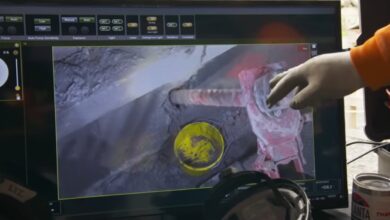
Below these stones, the team uncovers ancient timbers, iron fasteners, a forged wedge, and a metal hook—strong indications of deliberate construction and historical presence.
The Ritual Geometry of the Boulders
The boulders on Lot One are not randomly scattered; they appear ritually or symbolically arranged. Some form a circle. Others align like arrows or markers. When excavated, they consistently yield ancient materials—suggesting these are not just markers, but signposts from the past.
Could these boulders form part of a coded message or ceremonial site? The implications point to a sophisticated, possibly spiritual purpose behind their placement.
A Trail of Symbols Linking Malta and Oak Island
In Malta’s ancient Citadel prison, the team identifies more carvings that match Oak Island symbols—especially the six-petal flower, a motif connected to both the Knights Templar and the Knights of Malta. These symbols align with those found on the 90-foot stone and throughout Oak Island.
This pattern suggests that Oak Island may be part of a wider Templar network, with the island serving as either a vault or a final destination in a sacred mission to protect religious relics.
Bloodlines and Historical Records
Researcher Corgjun Mole presents the de Villiers family history, linking them to the Knights Hospitaller and the Templar leadership during key moments in medieval history. This bloodline resurfaces in multiple locations tied to the treasure mystery—Jerusalem, France, Malta, and now Oak Island.
The recurrence of this name, along with matching symbols and artifacts, supports the idea that a single family or secret order may have guarded the treasure’s location across generations and oceans.
The Emotional and Historical Weight
For the Oak Island team, especially Rick and Marty Lagina, these connections are more than just discoveries—they’re answers to lifelong questions. The symbols, relics, and maps are forming a coherent narrative, not just a collection of coincidences.
The emotional impact of seeing identical carvings across the ocean validates years of work and decades of speculation. Each discovery reinforces the idea that this is not a legend, but a historic operation shrouded in secrecy and designed to endure.
Conclusion: A Sacred Legacy, Not Just Treasure
This episode of The Curse of Oak Island reinforces that the island may not simply conceal gold—but rather a sacred legacy, preserved through careful planning, spiritual conviction, and encoded messages.
As the team continues exploring Lot One and following the bloodline connections across Europe, one truth becomes clearer: Oak Island is a final chapter in a much larger, transcontinental mystery, one that could redefine not just treasure hunting, but history itself.