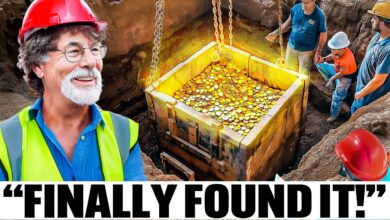
Iron Box Discovery on Oak Island Sparks Major Breakthrough Hopes
Season 12 of “The Curse of Oak Island” reaches a critical turning point as the team uncovers what may be the most significant find in decades — a large, metallic obstruction buried deep in shaft RP2.
As The Curse of Oak Island progresses through its twelfth season, the excavation efforts led by Rick and Marty Lagina have taken a dramatic leap forward. In Episode 19, now streaming, the focus shifts to a remarkable discovery deep within a key shaft that may finally validate over two centuries of legend and speculation.
At approximately 118 feet below ground in the excavation shaft known as RP2, the team encountered an unusual obstruction during a hammer grab excavation. Unlike previous encounters with wood or stone debris, this object produced a distinct metallic sound, prompting immediate speculation. What followed was the recovery of rusted iron fragments, including forged strapping that appeared to be manufactured—suggesting the remains of a deliberately constructed container, possibly a chest.
This potential find has reinvigorated comparisons with historical accounts dating back to 1861, when early diggers reported striking two treasure chests at a similar depth of around 110 feet. The consistency in location has not gone unnoticed. The discovery could represent a tangible link to those original reports, long dismissed by skeptics as misinterpretation or wishful thinking.




Metallurgical analysis of the recovered fragments indicates the use of wrought iron, consistent with 17th- and 18th-century craftsmanship. The significance of this detail is underscored by its alignment with several prominent Oak Island theories, including those involving the Duke d’Anville expedition, French naval operations, and even links to Templar treasure or Spanish colonial wealth.
Adding to the intrigue, further excavation from RP2 produced wooden debris consistent with collapsed tunnels or structural features, echoing the original Money Pit accounts from 1804, 1849, and 1861. The reported use of oak platforms at 10-foot intervals, originally dismissed as part of a hoax, now appears eerily in line with the team’s recent finds.

Meanwhile, exploration on Lot 5 continues to yield promising artifacts. A newly recovered shard of raspberry ware, a type of English pottery produced between 1720 and 1760, strengthens the argument that individuals of considerable means and organization were active on the island during the period when many theorists believe the treasure was concealed.
The possibility that the buried obstruction is not merely a lone chest but part of a larger, nested cache—a system of booby-trapped chambers designed to mislead and protect—has not been ruled out. This theory, long a part of Oak Island lore, suggests that any valuable hoard could be hidden within an intricate subterranean vault system resembling Russian nesting dolls.
Despite the excitement, the excavation is now proceeding with increased caution. The team is aware that one misstep could damage whatever lies beneath. Using sonar scans and data-driven excavation methods, they are mapping voids and monitoring water pressure to protect the integrity of the find.
Throughout the episode, a cautious optimism permeates the team’s approach. Rick Lagina, who has often voiced skepticism even amid progress, appears visibly hopeful. His demeanor reflects the weight of what may be at stake: the first conclusive evidence that something of value was purposefully buried on Oak Island centuries ago.
As the excavation of RP2 continues, the global Oak Island community watches closely. For now, the rusted iron fragments, carefully cataloged and preserved, may represent a key turning point. Not just in this season, but in the entire history of the Oak Island mystery.
If confirmed, the discovery could reshape long-standing theories, validate early accounts, and mark the beginning of a new chapter in one of the world’s longest-running treasure hunts.