Major Discoveries on Samuel Ball’s Lot Fuel New Theories on Oak Island
In a significant day of treasure hunting, the Oak Island team unearthed several compelling artifacts on Lot 25 and surrounding areas once owned by Samuel Ball—an American Revolutionary War veteran and former slave who rose to become one of the wealthiest men in Nova Scotia. The finds are shedding new light on Ball’s possible connections to British military officers and potentially, the island’s fabled treasure.
Discovery of a Gentleman’s Pocket Knife
While metal detecting near a tree beside Ball’s former foundation on Lot 25, Gary Drayton and Marty Lagina uncovered what appeared to be part of a vintage pocket knife. Featuring copper elements and a concealed blade, the piece was described as a fine gentleman’s accessory. The artifact suggests that Ball, often described as a simple cabbage farmer, may have owned or had access to items of value and refinement uncommon for the time.




Patent Plate Possibly Linked to Firearm
Soon after, the team uncovered what appeared to be a musket or firearm patent plate, featuring stylized period lettering. These plates were used between the late 17th and early 19th centuries by manufacturers to signify patented elements of weapons, like firing mechanisms or design innovations. The design and materials suggested it could date from between 1790 and 1830, aligning with Samuel Ball’s era. The plate could be further evidence of Ball’s connection to British military supplies or personnel.
Ox Shoe Suggests Industrial Activity
Moving to Lot 26, Drayton and Michael John used a powerful GPX 5000 metal detector to investigate deeper soil layers. There, they discovered a small ox shoe—adding to a growing collection of similar items previously found on the island. The presence of both large and small ox shoes suggests industrial or agricultural activity requiring pack animals, further supporting theories that Lot 26 may have been a hub of logistical operations.
British Naval Officer’s Button Found at Ball Foundation
During an archaeological dig at the foundation of Samuel Ball’s home, Alex Lagina uncovered a button featuring three engraved anchors and a rope design—an emblem strongly associated with British Royal Navy officer uniforms. Experts dated the button to between 1804 and 1825. The presence of such an artifact suggests that Ball may have had direct contact with high-ranking British military personnel, potentially explaining his mysterious accumulation of wealth.
Possible Encampment on Lot 24
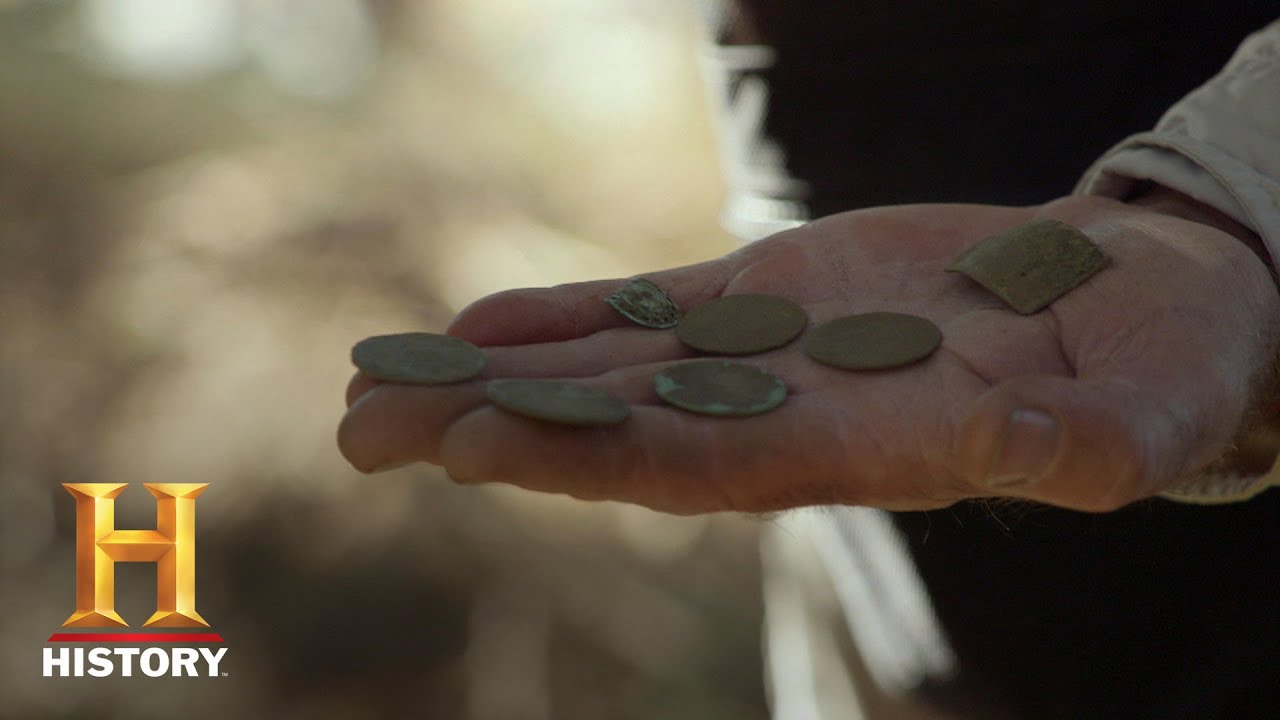
Drayton and Oak Island historian Charles Barkhouse later explored Lot 24, where they discovered six 18th-century British copper coins, a decorative button, and a metal fragment believed to be from the end of a pistol. The items were all found in close proximity, leading to speculation that the area may have been used as a temporary military encampment. One coin bore the image of King George II, dating it to the early 1700s—predating the Money Pit’s supposed discovery.
Growing Evidence of Samuel Ball’s Hidden Role
The artifacts found across Lots 24–26 are building a compelling case that Samuel Ball may have played a more significant role in Oak Island’s treasure narrative than previously believed. From military-grade items to evidence of wealth and tactical infrastructure, Ball’s land appears to hold secrets that are slowly being brought to light.
As the team continues their investigations, these findings provide further validation for theories suggesting that Samuel Ball was far more than a farmer—possibly a key figure in a much larger and more mysterious chapter of Oak Island’s enduring legend.