Parker Schnabel’s Million-Dollar Gamble: The Golden Goose Takes Flight at Dominion Creek
The Golden Goose Arrives
Parker Schnabel entered the final stretch of Season 16 with a high-stakes decision: a $1 million investment in a brand-new 45-ton wash plant, dubbed the Golden Goose. Designed to process more yardage and increase recovery rates, the Goose arrived in pieces at Dominion Creek, ready to face the ultimate test. The Yukon season was on a strict calendar, and every day counted to reach Parker’s 10,000-ounce goal.

Strategic Stockpiling of Pay Dirt
Earlier in the season, Parker made a bold choice: he shut down all sluicing on the Golden Mile, stockpiling two massive pay piles 4,000 feet apart. While outsiders saw the decision as risky, Parker’s math showed that his existing plants could not process enough material to meet the season target. The Golden Goose was meant to tackle the second pile, giving the crew a chance to catch up and stay on track.
Assembly Under Pressure
Assembling the Golden Goose was a race against time. Every team member had a specific role, from positioning hydraulic skids to securing the deck, mounting the hopper, and installing sluice run extensions. The challenge was amplified by Yukon winds and a 7-day build deadline. Any delay could have jeopardized the season’s target, turning the million-dollar gamble into a costly mistake.
Water Supply: Keeping the Plant Alive
Water is critical for wash plant operation, and the long supply line added risk. Mechanics Alec Kelly and Liam Buchella had to ensure sufficient pressure and flow to sustain 270 yards per hour of sluicing. Without reliable water, the Goose could not operate at full capacity, and the stockpiled pay would remain untouched.



First Run Success
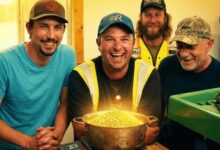
Once the Golden Goose received water and feed, the first scoop of pay dirt moved through the plant. The deck and sluice ran smoothly, black sand and gravel tumbled as intended, and gold began accumulating on the mats. Parker immediately saw that the plant could perform at spec, validating the million-dollar investment.
Weekly Cleanups Show the Impact
During the first full week, the combined output from Big Red, Bob, Roxanne, and the Golden Goose exceeded expectations. Big Red produced 140.7 ounces, Bob 127.4 ounces, and Roxanne 153.2 ounces. The total weekly recovery reached 421.3 ounces, a jump of over 100 ounces from the previous week, signaling that the Golden Goose was a game-changer for the season.
Sprinting Toward 10,000 Ounces
With the Goose fully operational, Parker’s team pushed the pay piles relentlessly. Each plant contributed to meeting weekly targets, ensuring the 10,000-ounce goal remained achievable. The season now hinged on continuous operation, favorable weather, and the reliability of all equipment.
Key Takeaways
- Strategic stockpiling can maximize plant efficiency.
- Assembly precision under pressure is critical for new equipment success.
- Water supply and feed rate are essential to achieve maximum plant performance.
- Combining multiple plants increases overall recovery and reduces risk.
- Calculated high-stakes decisions can turn a season around when executed properly.
Parker Schnabel’s Golden Goose demonstrates how strategic planning, precise execution, and high-risk investments can define a record-breaking season in Yukon gold mining.