The Curse of Oak Island May Be Hiding a Pattern Bigger Than the Treasure
More Than 200 Episodes, Endless Clues, and Still No Confirmed Treasure
After more than 200 episodes, countless boreholes, expert panels, dramatic discoveries, and tens of millions of dollars spent, The Curse of Oak Island still has not produced one thing the search has always promised: confirmed treasure.
That alone is not what makes the story interesting. Long searches fail all the time. What makes Oak Island different is the pattern. Over and over again, the series introduces what appears to be a major breakthrough. A coin, a cross, a bone fragment, a trace of gold, a carved stone, an underground anomaly. The moment is framed as potentially game-changing. Experts arrive. The music rises. The episode ends as if the mystery is finally about to give way.
And then, just as often, the breakthrough fades.
It is not always disproved. It is not always fully explained away. More often, it simply recedes. Another lead replaces it. Another clue takes over the narrative. Another season pushes the audience toward the sense that the answer is still close, just one more excavation away. When you lay those moments out in sequence and strip away the excitement, what begins to emerge is not chaos, but repetition.




Oak Island Has Always Been a Story Built on Persistence
The modern series did not invent the mystery. It inherited one that had already consumed generations.
The story begins in 1795, when Daniel McGinnis reportedly found a depression in the ground on Oak Island and began digging. Early accounts claimed he found layers of wood underground at regular intervals, giving rise to the belief that the so-called Money Pit had been deliberately engineered to conceal something far below. Whether that early account was as precise as later retellings suggest remains debatable, but its impact was undeniable. It launched one of the longest-running treasure hunts in North American history.
Over the next two centuries, expedition after expedition came to the island with money, machinery and conviction. They found shafts, flooding, fragments of material, and enough ambiguity to keep the mystery alive. They did not find a confirmed vault or a confirmed treasure hoard.
When Rick and Marty Lagina took control of the search in 2014, they brought unprecedented visibility and resources. Rick brought the lifelong obsession. Marty brought engineering logic and the financial ability to support a serious operation. Together, they turned Oak Island from a long-standing legend into one of television’s most successful ongoing mystery franchises.
The Show Has Found Many Things, But Few of Them Have Been Resolved
One of the strongest points in your text is that Oak Island is not short on discoveries.
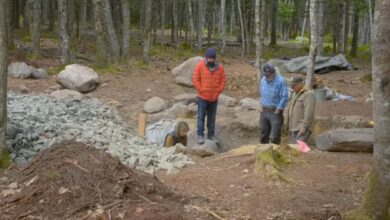
Across the show’s run, the team has recovered a Spanish coin, human bone fragments from the swamp, a lead cross, traces of gold in deep cores, old pottery, a human tooth, metal objects of various ages, and stone structures in the swamp that some interpret as ancient working surfaces or transport routes. None of these finds are imaginary. They are real discoveries presented on screen and often accompanied by expert discussion.
The problem is what happens next.
When viewed individually, each object can feel important. When viewed collectively over time, a different pattern begins to emerge. Many of the most dramatic discoveries are introduced as if they may resolve the mystery, yet relatively few receive a conclusion strong enough to close the loop. Instead, they often become part of a narrative chain that promises meaning without fully delivering it.
This is not necessarily proof of deception. But it is a structural feature of the show, and it matters.
The Breakthrough That Never Quite Lands
The article you shared argues that the most revealing pattern in The Curse of Oak Island is not any single clue, but the repeated cycle around those clues.
A dramatic find appears. Experts react. The story escalates. The episode ends with the suggestion that a historic answer may be near. Then, in later episodes, the object is either quietly downgraded, pushed aside, or left hanging while the narrative moves on to something else. The earlier “breakthrough” is not always directly refuted. It simply stops being central.
That structure is not rare in television, but on Oak Island it becomes especially important because it shapes how viewers understand evidence. A series can keep momentum alive not only by solving mysteries, but by continuously approaching solutions without quite reaching them.
That is why the pattern matters more than any one artifact.
The Bronze Sword Is a Clear Example of the Show’s Cycle
The bronze sword discussed in the file may be one of the clearest illustrations of this phenomenon.
On screen, it was treated as potentially extraordinary, perhaps even evidence of pre-Columbian Atlantic contact. If true, that would not just reshape Oak Island. It would reshape world history. But independent analysis reportedly moved in a much more skeptical direction, suggesting the sword was likely a modern reproduction rather than an ancient object. There was no verified chain of custody, no clear archaeological context, and no professional consensus supporting the most dramatic claims made around it.
Yet the sword still served its purpose within the show’s narrative cycle. It created intrigue, drove discussion, and added momentum. What it did not do was produce a durable historical conclusion equal to the excitement surrounding it.
That gap between presentation and resolution is central to the article’s argument.
Even the Foundation of the Money Pit Theory May Be Less Secure Than It Appears
The text also raises a more uncomfortable question: what if the underlying premise of the Money Pit itself has never been conclusively proven?
Some geologists, it notes, have suggested that the Money Pit may not be a human-made shaft at all. Nova Scotia’s geology includes conditions capable of producing sinkholes, cavities and unstable formations naturally. Under that interpretation, the wood layers reported in early digging could have been driftwood or natural deposition rather than proof of engineering. The flooding that has always been treated as evidence of an elaborate trap system could, at least in part, reflect normal coastal groundwater behavior in unstable tidal terrain.
The show has addressed such skeptical views, but addressing them is not the same as eliminating them scientifically. And that distinction matters. If the Money Pit’s foundational assumptions remain unresolved, then every later discovery inherits that uncertainty.
In other words, the mystery may not only be what lies below. The mystery may also be whether the original shaft was ever what searchers believed it to be.
Important Artifacts Often Carry More Ambiguity Than Their On-Screen Framing Suggests
The article is particularly strong when examining the gap between what certain finds definitely prove and what they are often presented as possibly proving.
Take the swamp bone fragments. Forensic testing reportedly confirmed that they contained human DNA from multiple individuals. That is a real and significant result. But it does not automatically prove the existence of a hidden treasure burial or a medieval secret operation. The dates are broad, and Oak Island has a long history of accidents, expeditions, and human presence in the wider region. The bones are important, but their meaning is not nearly as settled as television framing sometimes implies.
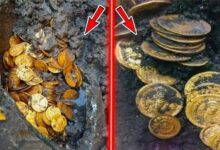
The same applies to the lead cross. On screen, it gained major narrative weight as a possible Templar-linked artifact. But, as the article notes, no authenticated historical record places the Knights Templar in North America, and the cross itself does not have a fully proven archaeological provenance capable of supporting the larger conclusion attached to it. Likewise, trace amounts of gold in drill core samples may sound thrilling, but they are not by themselves proof of a buried treasure cache. Nova Scotia has a real mining history, and natural gold traces are not the same as human-deposited wealth.
What this means is not that the artifacts are fake. It means their interpretive weight often exceeds their evidentiary certainty.

Some of the Most Famous Parts of the Legend Rest on Evidence That Cannot Be Verified
Perhaps the most damaging example in the article is the inscribed stone.
For generations, the Oak Island legend has leaned heavily on the idea that a coded stone found deep in the Money Pit contained a message about treasure buried below. That translation became one of the pillars of the island’s mythology. The problem, according to the file, is that the stone itself is no longer available for modern analysis, and the dramatic translation that helped fuel the legend cannot now be checked against the original object.
That is not a small gap. It is a foundational one.
A major part of the treasure theory depends on a translation of an object that cannot be properly reexamined. When one of the strongest historical pillars of the legend rests on something effectively unverifiable, the entire structure of belief becomes more fragile than many viewers may realize.
The Show’s Theory Ecosystem Often Blurs the Line Between Evidence and Speculation
Another key argument in the text is that the show does not merely present evidence. It creates an environment in which evidence and speculation often receive similar dramatic treatment.
Theories involving the Knights Templar, Francis Bacon, pirate caches, or secret manuscript vaults may be fascinating, but they do not all rest on the same level of documentary support. Yet on television, the format of war-room discussions, guest experts, dramatic editing and visual storytelling can make unsupported ideas feel as weighty as laboratory results. For a general audience, that makes it difficult to distinguish between what has been verified and what has simply been proposed with enthusiasm.
This does not require bad faith from anyone involved. It is often enough that speculation is entertaining and uncertainty is profitable. The result, however, is the same: a pseudo-historical atmosphere in which imagination and evidence can begin to merge.
The Online Debate Exists for a Reason
The file also makes an important point about the community that has grown around Oak Island outside the show itself.
Across Reddit, YouTube, podcasts and fan forums, viewers have tracked the series episode by episode, documenting the repeated cycle of escalation, cliffhanger and quiet retreat. Some of this criticism becomes excessive or unfair, especially when it assumes deliberate fraud. But the underlying observation is difficult to dismiss. A mystery is being commercially sustained at a scale that far exceeds the strength of the evidence currently supporting its most dramatic claims.
That does not mean Rick and Marty do not believe in the search. The article explicitly allows that they may be genuine. The issue is larger than individual sincerity. It is structural.
A long-running television mystery has strong incentives not to resolve too quickly in either direction.
The Incentive Structure of the Show Encourages Perpetual Near-Resolution
This may be the sharpest argument in the entire piece.
The show cannot easily survive either definitive outcome. If treasure is conclusively found, the story ends in a finale. If treasure is conclusively disproven, the mystery ends as well. What sustains the series is a third condition: the continual sense that the answer is close, that another borehole, another scan, another fragment, or another expert interpretation may finally open the door.
This does not require anyone to sit in a room and plot deception. It only requires a format that rewards anticipation more than closure. Under those conditions, editorial choices naturally lean toward escalation, toward preserving ambiguity, and toward quietly leaving behind discoveries that no longer serve the larger suspense.
That is why the pattern feels so stable across more than 200 episodes.
If You Treated the Series Like Data, the Pattern Would Be Hard to Miss
One of the most interesting ideas in the text is the suggestion that if you processed every episode the way an algorithm would, without emotional investment, dramatic music or narrative loyalty, you would see the show differently.
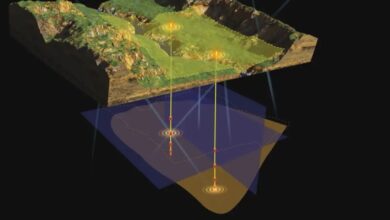
You would see a measurable loop. A promising lead emerges. Excitement rises. A complication interrupts. The baseline resets. Then the process begins again. You would also see that the ratio of dramatic claims to fully verified conclusions is very low. At the same time, you would still find genuine anomalies: human DNA in the swamp, transported artifacts, strange finds that demand explanation. But those anomalies would not automatically cluster into a confirmed treasure story. They would instead point to something messier: a real historical site overlaid with a very persistent narrative machine.
That is what makes the Oak Island phenomenon so difficult to dismiss entirely and so difficult to believe uncritically.
The Evidence Supports a Real Site, But Not a Confirmed Treasure
By the end of the file, the evidentiary picture is actually quite clear.
What is confirmed? Oak Island is real. Human activity there is real. Artifacts have been recovered. The island has been excavated repeatedly for over 200 years. What is not confirmed? That treasure exists, that the Money Pit is unquestionably man-made, that the flood tunnels are artificial, that the inscribed stone’s dramatic translation was accurate, or that any artifact yet found proves a deliberate buried hoard.
That gap between what is confirmed and what is hoped for is the central reality of Oak Island.
And the durability of that gap, despite centuries of searching and modern technology, may itself be the deepest mystery.
The Real Mystery May No Longer Be the Treasure
The article ends in a way that feels more thoughtful than sensational.
After all the digging, all the laboratory work, all the scans, and all the episodes, the real question may no longer be what treasure lies beneath Oak Island. It may be why every advance in method keeps arriving at the same result: more reasons to continue, but still no confirmation. There are only a few possibilities. Treasure may exist and remain unreachable. It may once have existed and have been quietly removed long ago. Or there may never have been any treasure at all, only a geological misunderstanding layered with real but misinterpreted historical artifacts.
That is a much harder conclusion to live with than a pirate hoard or a secret vault.
But it may also be the most honest.
After two centuries, six lost lives, tens of millions spent in the modern era alone, and more than 200 episodes of televised searching, Oak Island continues to produce the same thing with remarkable consistency: not treasure, but momentum. Not closure, but continuation.
And perhaps that, more than anything buried in the ground, is the system that has defined Oak Island all along.