The Truth Behind John Wilkes Booth’s “Death” , John Wilkes Booth Death Mystery Reignites With Claims of a Secret Escape | Expedition Files | Discovery

The Death of John Wilkes Booth Did Not End the Mystery
A Nation Sought Closure After Lincoln’s Assassination
Twelve days after Abraham Lincoln was assassinated, the man accused of carrying out one of the darkest acts in American history finally met his end. John Wilkes Booth, the well-known actor turned fugitive, had spent nearly two weeks fleeing capture as federal forces pursued him across the countryside. His desperate run came to a violent close at a Virginia farm, where he was cornered inside a tobacco barn.
When the barn was set ablaze in an effort to force him out, Booth was shot and fatally wounded. For many Americans, his death marked the end of a national nightmare. President Lincoln was dead, the assassin had been found, and justice, at least on the surface, seemed to have been served.
Yet the story did not end there. In the days that followed, Booth’s body became the focus of intense secrecy, speculation, and fear. Even after his death, questions surrounded what had happened to him and whether the government truly had the right man.



Booth’s Body Was Handled Under Heavy Guard
After Booth died, his remains were transported aboard the Union ironclad USS Montauk, where a surgeon carried out an autopsy. Officials moved quickly, knowing the public reaction could be explosive. Lincoln’s murder had stunned the country, and Booth was already one of the most hated men in America.
Authorities worried that if his burial place became known too soon, his body might be stolen, displayed, or desecrated by either sympathizers or angry citizens. Because of that, his remains were not immediately placed in a public grave. Instead, Booth’s body was kept under guard and placed at a Washington penitentiary.
Only later was he quietly interred in the Booth family plot at Green Mount Cemetery in Baltimore. It was a restrained and almost secretive ending for a man whose name had become forever linked to national tragedy.
The Conspirators Also Faced Swift Justice
Booth’s death did not close the government’s case. Investigators moved aggressively against those accused of helping him. In the aftermath of Lincoln’s assassination, four people were convicted of conspiracy and sentenced to death. Among them was David Herold, who had been with Booth during the final days of his escape and was captured after the barn fire.
On July 7, 1865, the convicted conspirators were hanged. Their executions appeared to bring finality to the case. The government had punished those it believed were responsible, and history seemed ready to record the assassination as a solved crime.
But even as official justice was carried out, doubt lingered in some corners. For a nation hungry for certainty, that doubt would become the seed of one of the strangest and most enduring legends in American history.
A New Theory Emerged Decades Later
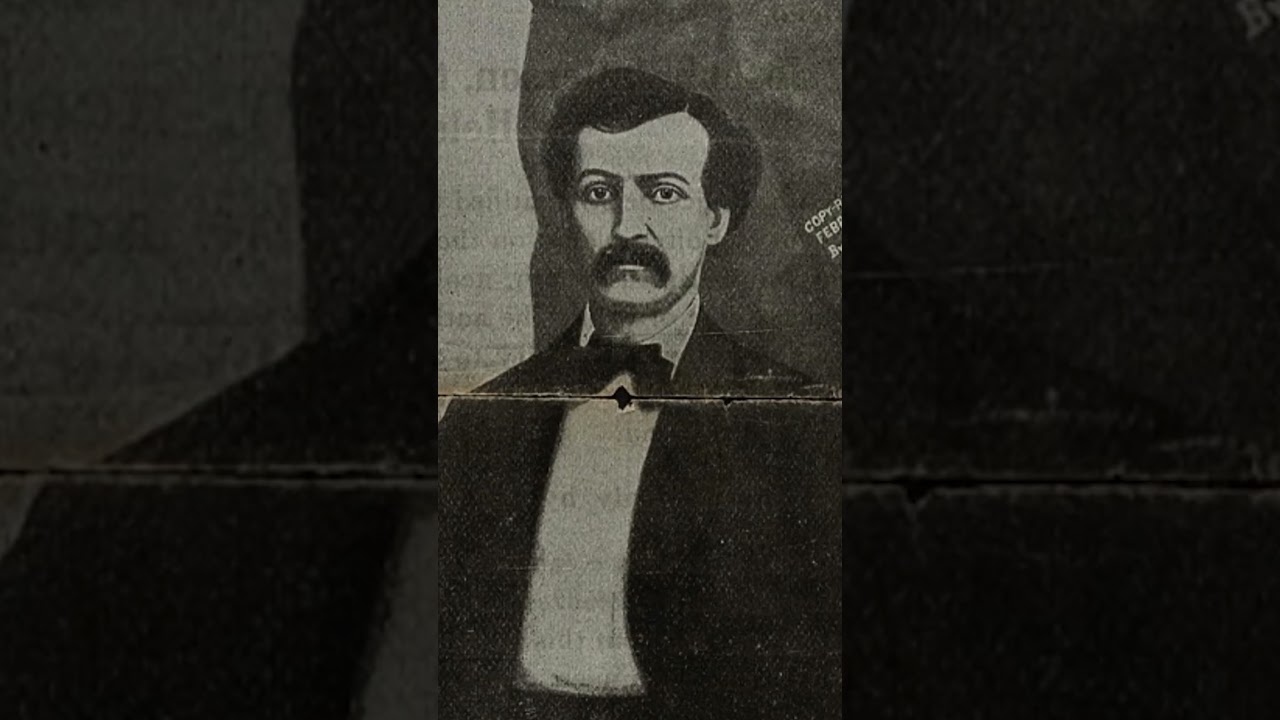
More than forty years after Lincoln’s assassination, a dramatic new version of events began to attract attention. It came from a Texas lawyer named Finis L. Bates, who in 1907 published a book with an extraordinary title: The Escape and Suicide of John Wilkes Booth.
In the book, Bates claimed that Booth had not died in the burning barn at all. Instead, he argued that the man killed there was someone else, while the real Booth slipped away and spent years living under an assumed identity.
At the center of Bates’s story was a man named John St. Helen, whom Bates said he had come to know personally. According to the account, St. Helen fell seriously ill in 1878 and, believing he was near death, made a sensational confession. He allegedly admitted that his true identity was not John St. Helen, but John Wilkes Booth.

That claim alone was enough to spark fascination. If true, it would mean that one of the most infamous men in American history had escaped justice and disappeared into ordinary life while the country believed him dead.
The John St. Helen Confession Changed the Story
Bates presented the confession as authentic and deeply personal. He described St. Helen as a troubled man carrying a burden too heavy to conceal forever. As the story went, illness stripped away his defenses and brought the truth to the surface.
According to Bates, St. Helen confessed not only that he was Booth, but that he had managed to evade capture after Lincoln’s assassination. He supposedly moved from place to place, using aliases and secrecy to stay out of sight. Over time, the fugitive who should have died in 1865 was said to have faded into the background of postwar America.
This version of events directly challenged the accepted historical record. Officially, Booth had been identified after the barn shooting, and the government treated the matter as closed. But Bates argued that the identification had been flawed and that later evidence pointed to a far more shocking reality.
Whether readers saw Bates as a truth-teller or a sensationalist, his book gave new life to a conspiracy theory that refused to disappear.
From Fugitive to Sideshow Legend
What made the story even stranger was what allegedly happened next. In the years after the supposed confession, the legend surrounding Booth took a bizarre turn. According to later retellings linked to Bates’s claims, the man said to be Booth did not simply vanish into history. He became the subject of one of the most macabre tales in American folklore.
The story claimed that after years of hiding under false identities, Booth eventually died by suicide. His remains were then reportedly preserved and transformed into a mummy, which later appeared in traveling sideshows.
That detail pushed the tale from historical controversy into the realm of the unbelievable. A presidential assassin who escaped death, lived in secret, confessed on his sickbed, and then became a carnival attraction sounded more like gothic fiction than documented history.
And yet, that very mix of horror, mystery, and spectacle helped keep the legend alive. The more outrageous the story became, the harder it was for the public to look away.
Why the Theory Continued to Fascinate People
The Booth escape theory endured because it touched a powerful nerve in the American imagination. The assassination of Abraham Lincoln was not just a criminal act. It was a national trauma. Events of that magnitude often attract myths, doubts, and alternative explanations, especially when the public feels that not every question has been answered.
Booth’s death happened quickly, in chaos, and during a moment of overwhelming grief and anger. The secrecy around his body, the emotional force of Lincoln’s murder, and the public appetite for dramatic revelations all created fertile ground for suspicion.
Finis Bates stepped into that atmosphere decades later with a story that offered exactly what mystery enthusiasts crave: a hidden truth, an official cover-up, and a villain who may have cheated justice. Whether the evidence supported it or not, the story had all the elements needed to endure.
History and Legend Remain Uneasy Rivals
Most historians reject the claim that John Wilkes Booth survived the 1865 barn shooting. The mainstream historical conclusion remains that Booth died shortly after being captured and that the escape story was built on weak evidence, personal testimony, and sensational storytelling.
Even so, the alternate version has never fully disappeared. It survives because it blurs the line between fact and folklore. It transforms a closed case into an open question and replaces finality with intrigue.
That is why the Booth legend still draws attention. The assassination of Lincoln may be one of the most documented events in American history, but the mystery-minded public has long been drawn to the possibility that the final chapter was not what it seemed.
A Case That Refused to Stay Buried
Officially, the story ended in April 1865 with a dead assassin, a military investigation, and a grieving nation. But in the decades that followed, the emergence of Finis Bates’s claims reopened the wound in a new and unexpected way.
What should have remained a historical conclusion became something stranger: a tale of secret identities, deathbed confessions, disputed bodies, and a mummy displayed for curious crowds.
For some, it is nothing more than an outlandish hoax. For others, it remains one of the most unsettling what-if stories in American history. Either way, the legend of John Wilkes Booth did not die with the man said to have fallen in that burning barn. It only changed form.