Josh Gates Uncovers New Questions Behind Some of the World’s Most Famous Mysteries

Josh Gates Investigates History’s Most Enduring Mysteries From Salem to the Holy Grail
Fear and Faith Collide in the Salem Witch Trials
Few events in American history capture the danger of mass fear quite like the Salem Witch Trials. What began as strange behavior among a small group of young girls quickly escalated into one of the most infamous episodes of hysteria ever recorded.
In a rigid Puritan society shaped by hardship, religious intensity, and constant fear of unseen forces, accusations spread rapidly. Within months, nearly 200 people were accused, and 19 were executed.
For years, the explanation seemed simple—witchcraft.





But modern analysis suggests something far more complex. Psychologists now point to conversion disorder, a condition where extreme stress manifests as physical symptoms. In a tightly controlled, fear-driven community, such behavior could spread rapidly, creating what experts now call mass psychogenic illness.
What once appeared supernatural may, in fact, have been the human mind under extraordinary pressure.
The Holy Grail: A Relic Lost Between Faith and Legend
Few objects have captured global imagination like the Holy Grail—the cup said to have been used by Jesus Christ at the Last Supper.
Yet, for all its importance, the Bible offers no clear description and no record of what happened to it.
Over centuries, the Grail transformed from a simple religious symbol into a powerful legend. Medieval stories linked it to King Arthur and the Knights Templar, suggesting it held divine or even life-giving power.
Hundreds of artifacts across Europe have been claimed as the Grail. Most have been dismissed. But one candidate continues to draw attention—the Valencia Chalice, housed in Spain.
Scientific analysis suggests that its upper bowl dates back to the first century AD and originates from the Holy Land. It also meets the ritual requirements of a Passover cup.
For believers, that is enough to consider it genuine.
For skeptics, the search continues.
Rendlesham Forest: Britain’s Most Mysterious UFO Encounter
In December 1980, a quiet forest in Suffolk, England became the center of one of the most debated UFO incidents in modern history.
U.S. Air Force personnel stationed at a nearby base reported strange lights moving through the trees. Some claimed to have approached a triangular metallic object, hovering silently above the ground.
Physical evidence seemed to support their claims:
- Triangular ground impressions
- Elevated radiation readings
- Recorded audio from senior officer Lieutenant Colonel Charles Halt
Yet official investigations concluded there was no threat or confirmed explanation.
Alternative theories range from a nearby lighthouse beam to electromagnetic plasma, a rare atmospheric phenomenon capable of producing strange lights—and possibly even hallucinations.
Despite decades of debate, witnesses remain firm:
What they saw was real—and not easily explained.
The Somerton Man: A Mystery Solved, But Not Explained
In 1948, a well-dressed man was found lifeless on a beach in Adelaide, Australia. He carried no identification, and every label on his clothing had been removed.
Inside a hidden pocket, investigators found a cryptic note reading Tamám Shud—a Persian phrase meaning it is finished.
The case quickly deepened:
- A coded message that could not be deciphered
- A connection to a rare book of poetry
- A possible link to Cold War espionage
For more than 70 years, the man’s identity remained unknown.
Then, modern DNA analysis provided an answer. He was identified as Carl Webb, an electrical engineer from Australia.
Yet the most important questions remain unanswered:
Why was he there?
What caused his death?
The mystery, though partially solved, is far from over.
The Lost City of Troy: Myth Meets Archaeology
For centuries, the story of the Troy was considered little more than legend, told through Homer’s epic, the Iliad.
That changed when archaeologists uncovered layers of ruins in modern-day Turkey, revealing a city destroyed around 1200 BC—matching the timeline of the Trojan War.
Evidence of fire, weapons, and destruction suggests a real conflict once took place.
Even ancient records from the Hittite Empire reference names and places similar to those in Homer’s account, strengthening the case that Troy was not entirely fictional.
The famous Trojan Horse, however, remains unproven. Some experts believe it may have been a symbolic description of a siege weapon rather than a literal structure.
Myth and reality continue to overlap.
Who Really Wrote Shakespeare’s Works?
The works of William Shakespeare are among the most celebrated in history. Yet questions about their true authorship have persisted for centuries.
Skeptics argue that a man of Shakespeare’s background—without formal higher education or extensive travel—could not have written such complex and internationally informed works.
Alternative candidates have been proposed, including:
- Francis Bacon
- Christopher Marlowe
- Edward de Vere
Supporters of the Edward de Vere theory argue that his education, travels, and position in society better match the knowledge displayed in the plays.
Still, no definitive proof has emerged.
The identity of the true author—if not Shakespeare himself—remains one of literature’s greatest mysteries.
A World Still Full of Questions
Across centuries and continents, these stories reveal a common truth:
History is not always as clear as it seems.
From Salem’s fear-driven accusations to lost relics, unexplained encounters, and hidden identities, each mystery challenges what we think we know.
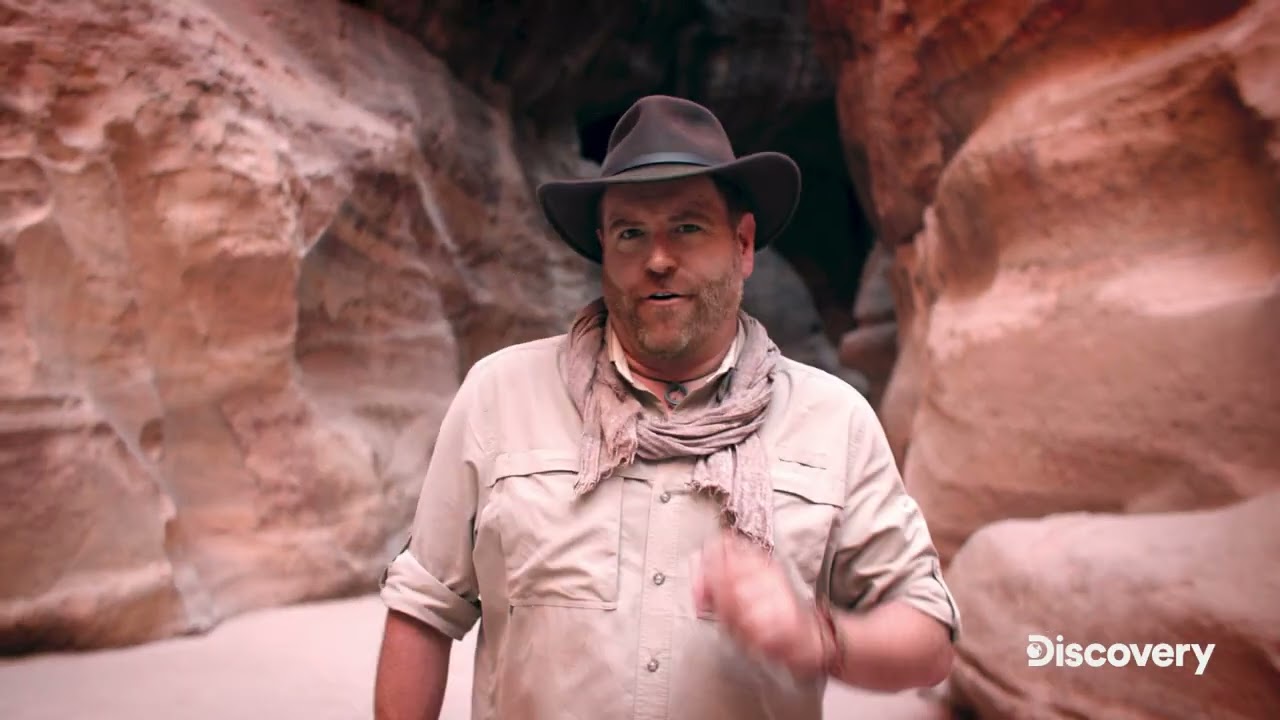
For investigators like Josh Gates, the goal is not just to find answers—but to keep asking the right questions.
Because sometimes, the most important discoveries are not the ones that solve a mystery—
But the ones that prove it is still alive.