Gold Rush Season 16 Reaches a Breaking Point as Big Risks and Bigger Pressure Take Over
Parker Schnabel rolls out the Golden Goose in a race against time
Parker Schnabel is stepping into one of the most critical phases of his season with almost no margin left for error. For much of the year, he has pushed his operation with the same discipline and intensity that have made him one of the most formidable mine bosses in the Klondike. But now, with the season entering its final stretch, the pressure has changed. This is no longer just about steady progress or strong weekly results. It is about whether Parker can still deliver the kind of finish he has been chasing all along.
The immediate problem is clear. After shutting down the Golden Mile, the cut that had been driving much of his production, Parker’s gold totals took a noticeable hit. The Golden Mile had been one of the most important engines of his season, and once that source began to wind down, the effect was impossible to ignore. A season that once looked like it had momentum and structure suddenly felt vulnerable. The drop in output left Parker with less flexibility, less time, and far more urgency than he would have liked.
Rather than accepting that setback, Parker responded in the only way he knows how: by making a bold move. He invested $1 million in a brand new wash plant called the Golden Goose, a machine built to push more yardage than any other plant in his operation. The name itself carries a sense of expectation, and Parker is clearly counting on it to become the machine that helps turn the season back in his favor.



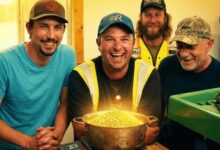
The Golden Goose is not simply another plant added to the lineup. It represents a calculated attempt to restore the capacity Parker has lost and to give his operation a final surge at the moment it needs it most. It is designed for scale, built for recovery, and expected to run with the kind of uptime that only a new machine should provide. In Parker’s eyes, it is not a luxury. It is a necessity.
At Dominion, where the operation is now centered, the timing could hardly be more important. Parker’s crew has spent weeks working through the Golden Mile, hauling the final remaining pay dirt out of the cut and stockpiling it into two massive mountains. One pile is already being run through Big Red, but the second needs the Golden Goose. The goal is straightforward in concept: finish clearing the cut, finish building the plant, and restore the site to full production as quickly as possible. Yet every part of that plan depends on speed, coordination, and the ability to avoid mistakes in an environment where mistakes are always possible.
The new plant has to prove itself straight away
From the moment the Golden Goose is dragged into position, the pressure surrounding it is obvious. This is not the sort of setup where anyone has the luxury of easing into the process. Mechanics are still bolting on parts while trucks continue hauling pay. Everyone knows the same thing: Parker cannot afford to have a million-dollar machine sitting still.
That urgency shapes the entire mood at the site. Every hour matters. Every unfinished task feels heavier because the season is no longer wide open. The countdown has already begun, and the Golden Goose has arrived not as a future investment but as an immediate solution to an immediate problem.
One of the first concerns is water. A wash plant of this size cannot perform without the volume and consistency needed to keep it running at full strength. If the water system does not deliver, then the plant cannot deliver either, and the entire investment begins to lose its edge. That is why even something as basic as pumping water becomes a moment of real tension. The crew is not simply checking another mechanical box. They are testing whether this machine can become what Parker needs it to be.
When the system is finally switched on, there is a brief moment of anticipation that says everything about the stakes. So much of the season now seems to be hanging on whether this plant works the way it was meant to work. When the first scoop of pay finally goes in, there is clear relief. For a moment, it feels like the operation has crossed a major hurdle.

But in gold mining, relief rarely lasts long. Almost immediately, a problem with the belt interrupts the early optimism, reminding everyone that even a new machine is never guaranteed to behave perfectly under real working conditions. The celebration pauses. The mechanics move in. The crew shifts from excitement to problem-solving. That transition is part of what defines a season like this. Nothing is ever won simply because a new machine arrives. It has to be made to work, and sometimes it has to be fought into rhythm before it becomes useful.
Once the issue is cleared and the Golden Goose gets going again, the shift in momentum becomes real. Now Parker has a genuine chance to rebuild the production he has lost. Now the plant is no longer just a costly gamble parked on a pad. It is part of the race.
Dominion becomes the centre of Parker’s final push
What makes the Golden Goose so important is the scale of what still needs to be processed. Behind the plant sits a huge stockpile of pay, enough for close to 1,000 hours of sluicing. That is both encouraging and intimidating. It means there is still opportunity left in the ground Parker has already stripped. But it also means the operation must stay moving almost without interruption if that opportunity is going to translate into ounces before the season ends.
There is not much more than 1,000 hours left in the season itself. That fact gives the entire site a new tone. The margin between success and disappointment is no longer wide. It is measured in uptime, in yardage, in the ability to keep machines running and material feeding through at the pace Parker wants.
That is why the Golden Goose matters beyond its technical specifications. It is not only about having a fourth plant or a better recovery system. It is about whether Parker can turn the final weeks of the season into a concentrated burst of production strong enough to carry him back toward his 10,000-ounce target. The dream is still alive, but it now depends on relentless execution.

There is something fitting about Parker’s response to adversity. He has always been at his most compelling when the numbers tighten and the season stops feeling comfortable. He does not seem built for passive acceptance. When things slip, he pushes harder. When the target moves further away, he looks for a way to close the gap rather than explain it away. The Golden Goose is a perfect expression of that mindset. It is expensive, ambitious, and risky, but it also shows Parker’s refusal to let the season drift out of reach without a serious fight.
The pressure now extends to every part of the crew
Of course, a wash plant alone does not change a season. A machine this powerful only matters if the entire operation around it can keep up. Trucks need to keep hauling. Excavators need to keep digging. Mechanics need to keep solving problems before they grow. Feed has to stay consistent. Water has to stay flowing. If any link in that chain breaks down, the Golden Goose becomes far less effective.
That is why the pressure is not sitting only on Parker. It is spread across the whole crew. The men hauling pay out of the Golden Mile are not just doing routine work. They are racing against the season. The mechanics tightening bolts and dealing with breakdowns are not simply assembling equipment. They are protecting Parker’s last big push. Every person on the site is part of the same larger effort to turn time, dirt, and machinery into the gold Parker still needs.
This is where late-season mining becomes as much about coordination as it is about ambition. Big machines and big investments create headlines, but they only pay off when an entire crew can match the intensity of the plan. In that sense, the Golden Goose is not only a test of Parker’s judgment. It is also a test of whether the whole operation can respond when the pressure reaches its highest point.
The season has become a sprint, not a strategy game
Earlier in the year, Parker could think in longer arcs. He could balance cuts, distribute resources, and let the season unfold across a wider timeline. That phase is over now. What remains is direct, compressed, and unforgiving. The mine boss who once had room to plan now has to execute. The season is no longer asking for patience. It is demanding speed.
That shift changes the emotional feel of everything happening at Dominion. The Golden Goose is exciting, but it is also desperate in the most focused sense of the word. It is Parker looking at the narrowing window in front of him and deciding that the only acceptable response is to throw more strength at the problem.
If it works, the plant could become one of the defining moves of the season. It could restore Parker’s output, create the kind of weekly weigh-ins that put him right back in the chase, and reinforce his reputation as a mine boss willing to act decisively when the situation demands it.
If it does not work, then the Golden Goose could come to symbolize a season where the pressure finally became too much to overcome. That is why every moment around this machine feels bigger than a normal startup. It is not just another operational change. It is the point where Parker’s season may begin to turn one way or the other.
A defining test lies ahead
What happens next will say a great deal about Parker Schnabel and this season as a whole. The ingredients are there for a major comeback: a powerful new plant, a mountain of pay ready to run, and still enough time left for a serious charge. But the conditions are equally unforgiving. There can be no major delays, no sustained breakdowns, and no wasted opportunities.
The Golden Goose has arrived at exactly the moment Parker needed something to change. Now it must do more than look impressive. It has to perform. It has to carry weight. It has to help transform a season that was starting to slip into one that still has a chance to finish with force.
For Parker, this is no longer about maintaining momentum. It is about reclaiming it. And with the clock ticking down and the stockpile waiting behind the plant, the message is brutally simple: the time for preparation is over. The run to the finish has begun.