A Major War Room Meeting: Uncovering a New Lead
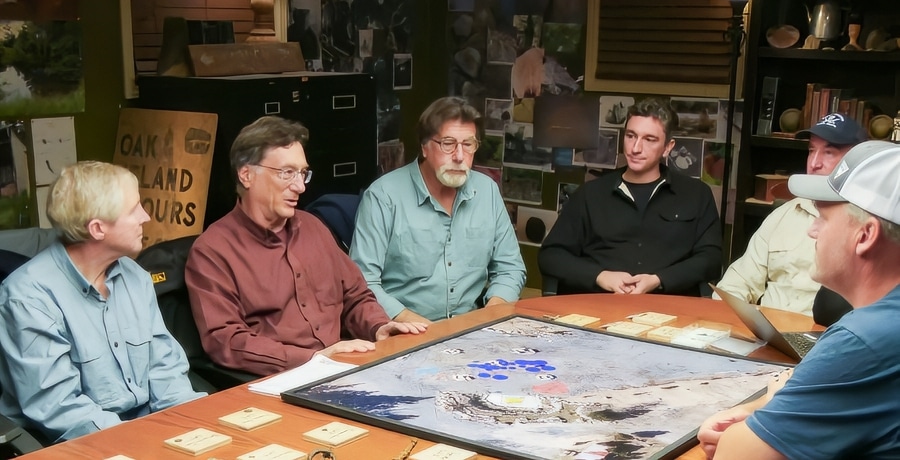
Rick Lagina has called an important meeting with the team in the War Room. The reason? A major discovery in the swamp has led to new research opportunities. As always, Rick emphasizes that they must follow where the clues lead, and the latest evidence has prompted the team to dig deeper—this time into historical archives.
To investigate further, team members Doug Crowl, Judy Roudabush, and historian Terry Deveau were tasked with searching through archives known to contain records of previous Oak Island searches. Their mission? To validate Fred Nolan’s long-standing theory that multiple treasures are buried across Oak Island.
The Discovery of the Goodwin Map
Doug and Terry traveled to the Connecticut Museum of Culture and History, where they found materials linked to a man named William B. Goodwin. Goodwin, a Connecticut-based businessman and historian from the 1930s, had conducted extensive research on Oak Island.
One of the most significant finds from Goodwin’s collection was a hand-drawn diagram he labeled the “Blair Treasure Map.” Goodwin’s notes indicated that the original map, now missing, once belonged to Frederick Blair—the man who reported the Chapel Vault discovery at a depth of 153 feet in the Money Pit in 1897.




Goodwin’s version of the map pointed to three specific stone markers on the western side of Oak Island. These markers suggested the possibility of multiple treasure caches—a theory that, if proven correct, could change everything the team knows about the island’s treasure distribution.
Investigating the Markers on Lot 1
With the newfound map in hand, the team set out to locate the original landmarks and verify the authenticity of the treasure markers.
- First Landmark: A Stone with an X
The first target was a flat rock with an ‘X’ carved into its surface, precisely as indicated on the map. As the team approached, they were stunned to find a large, prominent X engraved on a boulder. However, metal detection around the stone revealed no immediate finds beneath it.
- Second Landmark: A Stone with an X and Squares
Moving to the next location, they found another boulder matching the map’s description—an X with square seams on it. Despite no immediate metallic finds, the team speculated that these markers could be leading them toward a final target.
- Third Landmark: The Kidney-Shaped Rock
According to the map, a kidney-shaped stone should be located exactly 91 feet inland from the previous marker. After measuring, the team found a rock that closely matched the description. This further validated the map’s authenticity.
- Final Landmark: The Cleaved Boulder
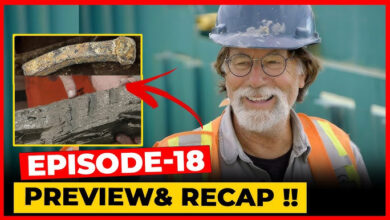
The last and most exciting find was a large boulder that appeared to have been split in half, possibly by lightning. As the team scanned it, they detected a significant metal signal beneath the rock. Upon excavation, they uncovered an old iron tool, potentially dating back to the 1700s or earlier.

The Significance of These Finds
The discovery of these markers is groundbreaking because it suggests deliberate placement of stones that may have been used as directional guides to hidden treasure caches. The presence of a forged iron tool near the final marker indicates human activity, possibly from centuries ago.
Now, the team faces a crucial next step: determining whether these landmarks lead to a buried vault or another treasure location. This new lead takes the treasure hunt beyond just the Money Pit and strengthens the argument that Oak Island holds multiple hidden caches.
What’s Next?
With confirmed markers aligning with the Goodwin map, the team will need to bring in excavation equipment to clear the area and investigate further.
Rick and Marty Lagina remain hopeful. With each discovery, the pieces of the Oak Island puzzle continue to come together. Could this finally be the breakthrough they’ve been waiting for?
Only time—and more digging—will tell.