The Search for Treasure on Oak Island
A New Discovery Begins
As a new week starts in the quest for treasure on Oak Island, Rick and Marty Lagina, along with Marty’s son Alex, Craig Tester, and Dave Blankenship, travel 50 miles northeast to St. Mary’s University in Halifax.

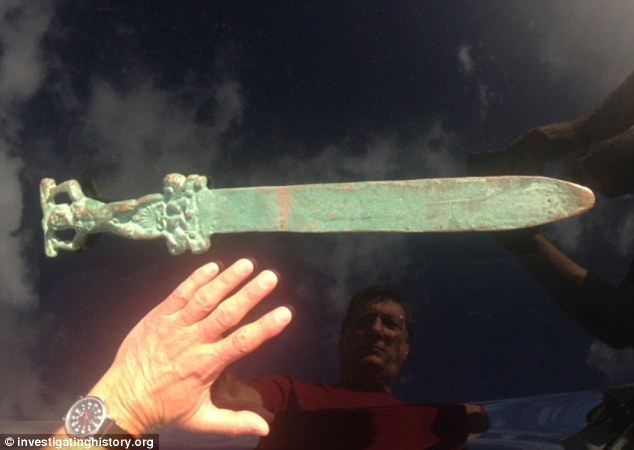
Examining the Roman Sword
The team is eager to determine whether an ancient Roman-style sword, reportedly found in the waters near Oak Island, is authentic. Professor Myles McCallum, an expert in Roman archaeology, inspects the artifact.
- The sword features Hercules, an important Roman figure.
- The casting technique suggests it was never a functional weapon but rather a decorative item.
- The professor expresses skepticism about its authenticity, suggesting it could be a historical replica rather than an ancient artifact.
Historical Context: Romans and Carthaginians in North America?
- Some theorists believe the Carthaginians, skilled sailors from 600–200 BC, may have reached North America.
- Roman artifacts have been discovered in unexpected locations, fueling speculation about early transatlantic travel.
Finding a Roman Coin on Oak Island
Alex Lagina, Jack Begley, and archaeometallurgist Emma Culligan invite numismatist Sandy Campbell to examine a cut copper coin discovered on Lot 5.
- X-ray fluorescence (XRF) analysis reveals high levels of copper, lead, tin, and arsenic, suggesting a pre-1500s origin.
- The design and characters on the coin indicate it is likely Roman, dating between 300 BC and 600 AD.
Connecting the Coin to the Knights Templar
The team recalls their trip to Portugal, where they studied ancient roads and Templar carvings resembling symbols found on Oak Island. The discovery of the Roman coin raises several questions:




- Did the Knights Templar bring Roman artifacts to Oak Island?
- Could the stone road in the swamp be linked to Roman or Portuguese explorers?
Uncovering More Clues in the Swamp
Rick, Gary, and Billy resume excavations in the swamp, focusing on a possible man-made stone ramp.
- A small, corroded horseshoe is discovered.
- The team speculates it belonged to a horse transported by ship to the island.
Analyzing the Horseshoe
Blacksmithing expert Carmen Legge examines the artifact and makes significant observations:
- The horseshoe is short and thick, indicating it was designed for a high-ranking rider.
- It likely dates back to the 1400s, making it the oldest horseshoe found on Oak Island so far.
- It may have belonged to a leader overseeing construction on the island.
The Mystery Deepens
With a Roman coin and a 15th-century horseshoe discovered in the same area, the team is left with more questions:
- Who brought these artifacts to Oak Island?
- What else remains buried on Lot 5 and the swamp?
Determined to uncover more, the team prepares for the next phase of their search, hoping to piece together Oak Island’s ancient and mysterious past.