Is This the End of the Oak Island Mystery? Treasure Evidence Finally Unearthed!

Beneath the 40,000-pound Boulder: The Hidden Treasure of Oak Island
The search for Oak Island’s legendary treasure has captivated treasure hunters, historians, and adventurers for centuries. Throughout the decades, countless theories, expeditions, and failed attempts have focused on unearthing the mystery buried beneath this small Nova Scotia island. While many clues have been uncovered, none have been definitive. However, in the recent episode of The Curse of Oak Island season 13, episode 17, the team made a discovery that may lead to the breakthrough they have been desperately searching for. Beneath a massive 40,000-pound boulder, a hidden treasure might be waiting, with new evidence pointing to an exciting possibility: a buried cache marked by a meticulously designed stone structure and a trace of silver.
The Discovery: A Boulder’s Secret
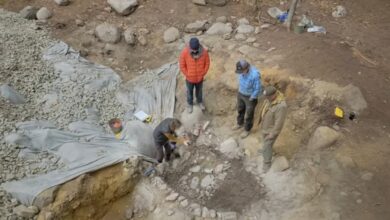
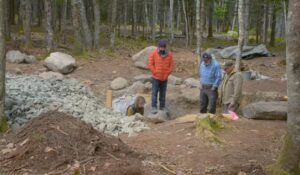
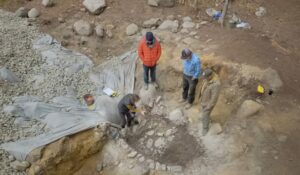
The day began like any other in the ongoing Oak Island excavation, with Rick Lagina, Marty Lagina, Fiona Steele, and Jack Begley continuing their work in the area of Lot 8. After the removal of the enormous 40,000-pound boulder that had blocked their progress, the team uncovered a surprising feature underneath the rock. They were not expecting to find what they did: a series of tightly packed stones forming what appeared to be a paved surface.

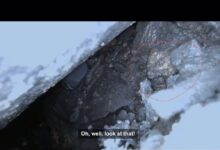


Fiona Steele and Jack Begley had been excavating carefully, and upon closer inspection, they realized the stones beneath the boulder were not naturally formed, but intentionally placed. Unlike the surrounding round rocks, the stones were flat and arranged in a precise pattern. This discovery immediately raised questions about its purpose. Was this just another geological oddity, or was this structure marking something far more significant buried underneath it?
A Possible European Connection
The mystery of this stone formation deepened as the team analyzed the structure further. Geoscientist Dr. Ian Spooner, who had been taking soil samples and conducting tests, confirmed that the rocks were not naturally placed. In fact, the surrounding organic soil was an indication that these stones had been intentionally positioned long after the soil had formed. This led the team to speculate that the structure might be much older than previously thought.
Dr. Spooner’s analysis of the soil samples beneath the boulder revealed something extraordinary. Among the usual elements found in the soil, there were traces of silver. This discovery had the team excited. If silver was indeed present in the soil, it could mean one of two things: there could be a treasure buried beneath the structure, or the site was once a place of mining activity. Silver, a valuable metal historically associated with treasure hunting, further fueled the idea that this stone formation might mark the spot of hidden riches.
With this new data in hand, the team began to hypothesize that the structure could be the remnants of a European construction. Rick Lagina, who has spent years researching the island’s past, suggested that the structure might be a European megalithic design. The presence of silver and the intricacy of the stone arrangement suggested a highly sophisticated knowledge of stone construction and geometry—skills typically associated with European builders, not indigenous people.
The Puzzle Pieces Begin to Fit
As the investigation continued, more signs began to align with the possibility that this stone formation was built by Europeans. The team began to theorize that the structure was intentionally designed to mark the location of something significant buried beneath it, or it could be a protective cover over an important chamber. The presence of lead traces in the soil, which Dr. Spooner had previously found, reinforced this idea. Lead is often associated with historical mining techniques, particularly the use of underground fire-setting to ventilate tunnels.
In addition to the geological and chemical evidence, the stone formation itself had the hallmark features of megalithic structures seen throughout Europe. The possibility that the structure could date back centuries, possibly even to the 14th or 15th century, adds a new layer of complexity to the Oak Island mystery. If this theory holds true, it would significantly alter the timeline of human activity on the island, pushing the arrival of European settlers or explorers back far earlier than historians have previously believed.
Moving Forward with Caution
Despite the promising discoveries, the team knows that they must proceed carefully. Excavation beneath the boulder is still ongoing, and while the evidence points to something extraordinary, the truth is still buried beneath layers of soil and rock. Fiona Steele, who has been at the forefront of the Lot 8 excavation, emphasized the importance of not rushing the process. “We need to be careful not to disturb anything too quickly,” she remarked. “Every piece of the puzzle matters.”
As the excavation continues, the team is left wondering: Could this be the moment they’ve been waiting for? The presence of silver beneath the boulder, the carefully arranged stones, and the analysis from Dr. Spooner all point to the possibility of something far greater hidden beneath the island’s surface. Perhaps the treasure, or at least a major historical find, is finally within their reach.
The Bigger Picture: Is There Treasure Under Oak Island?
While none of the discoveries so far definitively prove that a treasure is buried on Oak Island, they continue to provide valuable clues that piece together a complex history of human activity on the island. The mystery surrounding the Money Pit, the stone formation on Lot 8, and the presence of silver and lead all suggest that there may have been a concerted effort by previous explorers or settlers to hide something of great value.
The team at Oak Island is not just chasing treasure. They are trying to understand the island’s history, uncovering secrets that have been buried for centuries. The growing body of evidence—from metal fragments and pipes in the Money Pit to the stone formation on Lot 8—suggests that Oak Island was not just a site of treasure hunting but a place where advanced construction and mining techniques were employed long before the island became a treasure hunting hotspot.
As the investigation moves forward, the team’s hope remains that they can finally reveal the ultimate secret that Oak Island has been guarding for over two centuries. Whether it’s a treasure, a historical artifact, or something else entirely, the mystery is far from over. The journey for answers continues, and each new discovery brings the team one step closer to solving one of history’s most enduring mysteries.
Conclusion: A New Chapter in Oak Island’s Mystery
For Rick Lagina and his team, this latest discovery beneath the 40,000-pound boulder represents more than just a potential treasure. It’s a new chapter in the ongoing saga of Oak Island. Armed with modern technology and a renewed sense of purpose, the team is more determined than ever to uncover the truth. While the treasure remains elusive, every new piece of evidence brings them closer to understanding what really happened on Oak Island all those years ago. The hunt continues, and with each new discovery, the mystery deepens.