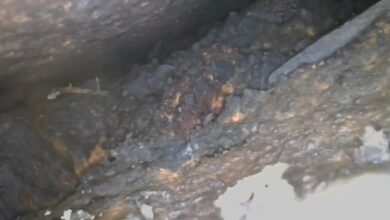
Metal Strike in the Money Pit: Breakthrough or Narrative Leap?
The account describes a dramatic sequence: a drill striking metal deep beneath Oak Island, core samples containing traces of gold, a journal leading to a precise anomaly, and ultimately a sealed granite slab opening into a chamber filled with gold bars and pirate ledgers.
From an analytical standpoint, such a sequence would represent the most consequential discovery in the documented history of Oak Island. However, several elements require careful scrutiny.
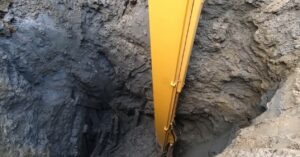
The Metal Core Sample: What Would It Actually Mean?
If a drill core retrieved metallic material containing gold traces, three possibilities would need to be evaluated:
- Contamination – Gold trace presence can result from modern drilling tools or historical searcher debris.
- Alloy Fragments – Metallic anomalies may be structural remnants from prior excavation attempts.
- Deposited Artifact – A genuine pre-modern metallic object embedded within undisturbed strata.
Laboratory confirmation would require:



- Metallurgical composition testing
- Corrosion pattern analysis
- Stratigraphic context validation
Gold traces alone would not confirm treasure presence without controlled provenance.
The Journal and Rectangular Void
The narrative introduces a 17th-century pirate journal pointing to a specific location, followed by ground-penetrating radar identifying a perfectly rectangular void at 160 feet.
A rectangular subsurface anomaly of 30 ft by 10 ft would indeed be atypical for natural geology. However, validation would require:
- Independent seismic tomography correlation
- Core sampling of void boundaries
- Bedrock structural mapping
Such a void would be considered highly significant — but still preliminary evidence until physically accessed and stabilized.
Granite Slab With Symbolic Etching
A hand-cut granite slab set into bedrock with hinges and symbolic carvings (Templar cross, Masonic square and compass, skull motif) would constitute direct evidence of intentional engineering.
However, this raises immediate logistical questions:
- Quarry origin tracing
- Tool mark dating
- Hinge metallurgy aging
- Structural stability under 160 ft hydrostatic pressure
A granite barrier surviving centuries of tidal exposure would require exceptional preservation conditions.

Flood Mechanism Triggered by Pressure Plates
The described chamber defense — pressure plates activating concealed sluice gates — suggests advanced mechanical engineering.
From a technical perspective:
- Sustained hydrostatic control over 300 years without maintenance is unlikely.
- Mechanical flood triggers require corrosion-resistant components.
- Tidal pressure systems degrade over time without upkeep.
A functioning 17th-century pressure-triggered flood system in active condition today would be extraordinary — but would demand structural evidence beyond anecdotal description.
Pirate Syndicate Banking Network Theory
The discovery of ledgers describing a coordinated transatlantic pirate syndicate operating as a centralized vaulting system is conceptually compelling.
Historically, pirate enterprises were semi-organized but not known to operate as a centralized offshore banking consortium.
Verification would require:
- Document authentication (ink dating, parchment aging, fiber analysis)
- Cross-reference with known shipping manifests
- Independent cryptographic translation validation
Such documentation would reshape piracy scholarship if authenticated.
Strategic and Historical Impact
If all described elements were verified:
- Oak Island would shift from speculative legend to confirmed 17th–18th century engineered vault site.
- The discovery would rank among the most significant maritime archaeological finds in North America.
- International legal, cultural heritage, and governmental claims would immediately arise.
However, extraordinary claims require proportionate evidence.
Reality Assessment
As of documented historical records and televised material:
- No confirmed chamber filled with gold bars has been publicly authenticated.
- No pirate syndicate ledger has been independently verified.
- No $110 million vault extraction has been reported through academic or governmental channels.
The described sequence aligns more closely with speculative narrative or fictional dramatization rather than confirmed archaeological disclosure.
Conclusion
The scenario presents a compelling synthesis of pirate lore, Templar symbolism, engineered flood defenses, and global treasure networks. As narrative, it is cohesive and dramatic.
As historical reality, each element would require rigorous forensic, geological, and archival validation before acceptance.
The central question remains unchanged:
Has the team encountered a genuine engineered anomaly beneath the Money Pit?
Until independently verified material evidence is released, the Oak Island mystery remains in the realm of possibility rather than confirmed discovery.