Lead, Voids, and a Boulder That Refuses to Stay Silent
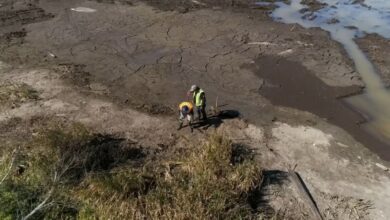
On Lot 8, the investigation surrounding a massive boulder takes a decisive step forward as The Curse of Oak Island brings Dr Ian Spooner back into the field. From the outset, the tone is different. This is no longer casual curiosity. The team has deliberately paused any intrusive work, waiting for scientific confirmation before disturbing what lies beneath.
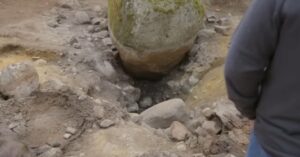
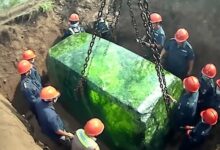
When Spooner examines the area, one detail immediately stands out: disturbed soil beneath the boulder, despite the fact that nothing underneath has been actively excavated. Combined with the evenly spaced stones surrounding the boulder—clearly positioned to stabilise it—the feature begins to look deliberate rather than natural.
A Backfilled Void Raises New Questions
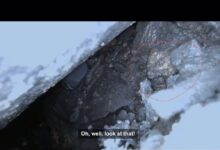
As the archaeological team continues, they confirm the presence of a backfilled void directly beneath the boulder. Previous camera work in this space has already revealed anomalies, including what appeared to be an iron stake and small reflective objects that briefly drew attention.
The existence of a void alone is notable, but its location—sealed beneath a multi-ton stone—forces a deeper question: why was this space created, and why was it hidden so carefully?


Soil Samples and an Unusual Metal Signature
To move beyond speculation, Spooner extracts soil cores from beneath the boulder and takes them to the lab for analysis. His goal is twofold: determine whether the feature can be dated and assess whether the soil carries a human activity signature.
The results are unexpected. Lead levels beneath the boulder reach as high as 140 parts per million, compared with roughly 12 parts per million in nearby control samples. This sharp contrast rules out simple environmental contamination.
According to Spooner, one historical explanation fits: fire used for ventilation in underground shafts. Dating back to antiquity, fires were often lit to draw fresh air through tunnels, a process that leaves elevated lead residues in surrounding soils.
Evidence of Human Activity Beneath Lot 8
What makes the findings compelling is not just the lead itself, but its isolation. Surrounding soils show no comparable spike, suggesting localised human activity, not a broader geological phenomenon.
Rick Lagina voices what the data implies: someone may have worked beneath this boulder, possibly connected to a tunnel system. If so, the boulder may not be random at all—it could be a deliberate seal or marker, placed to conceal access below.
Cameras Reveal a Network of Voids
Later that day, the team reinserts a camera beneath the boulder after further clearing. What appears on the monitor is unsettling in its scale. Rather than a single cavity, the camera reveals multiple interconnected voids, forming what Alex Lagina describes as a “matrix.”
This structure is difficult to reconcile with natural processes alone. Voids of this size and consistency suggest intentional excavation, reinforcing the idea that something of value—or significance—was carefully placed and protected.
A Glint That Changes the Mood
As the camera pushes deeper, the tone shifts. Fiona observes irregular formations with gold-coloured, vein-like patterns embedded in rock. Marty Lagina hesitates, then admits that if he didn’t know better, he would say it looked like gold.
The team remains cautious. It could be mineral staining or subsoil exposure. But the fact remains: the area beneath the boulder has not been disturbed, and the material appears well-defined rather than smeared or diffuse.
That distinction matters.
From Observation to Decision
With soil data, void mapping, and camera footage in hand, the archaeologists reach a conclusion: they have exhausted what can be learned without moving the boulder itself. Any further progress requires a controlled lift.
Marty Lagina, barely concealing his impatience, pushes the group toward action. This is no longer about speculation—it is about logistics. If the boulder is hiding something, it must be moved safely, with full archaeological oversight.
Preparing for the Lift
Attention turns to the practical challenge ahead. Moving a stone of this size will require a large crane, precise planning, and careful coordination to avoid damaging whatever lies beneath. The team agrees: the time for observation has ended.
As Marty puts it, lifting the Lot 8 boulder is now one of the most significant undertakings of the season.
Why the Lot 8 Boulder Matters
This moment marks a shift. The Lot 8 boulder, once just another anomaly among many, has become a focal point. Elevated lead, engineered stone placement, interconnected voids, and unexplained mineral features all point toward intentional human design.
Whether it leads directly to treasure or to a deeper understanding of Oak Island’s history remains unknown. But one thing is clear: this boulder is no longer staying where it is.
And whatever lies beneath it may finally force the island to give up another piece of its long-guarded story.