What Lies Beneath Lot 8? Oak Island Findings Suggest a Purposeful Construction

A New Morning on Oak Island, and a Suspicious Formation
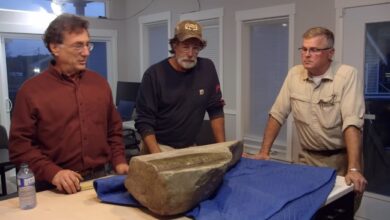
As work resumes on Oak Island, The Curse of Oak Island team members Rick Lagina, Marty Lagina, and Craig Tester join the archaeological crew on Lot 8 to examine what may be one of the most intriguing features discovered there in years.
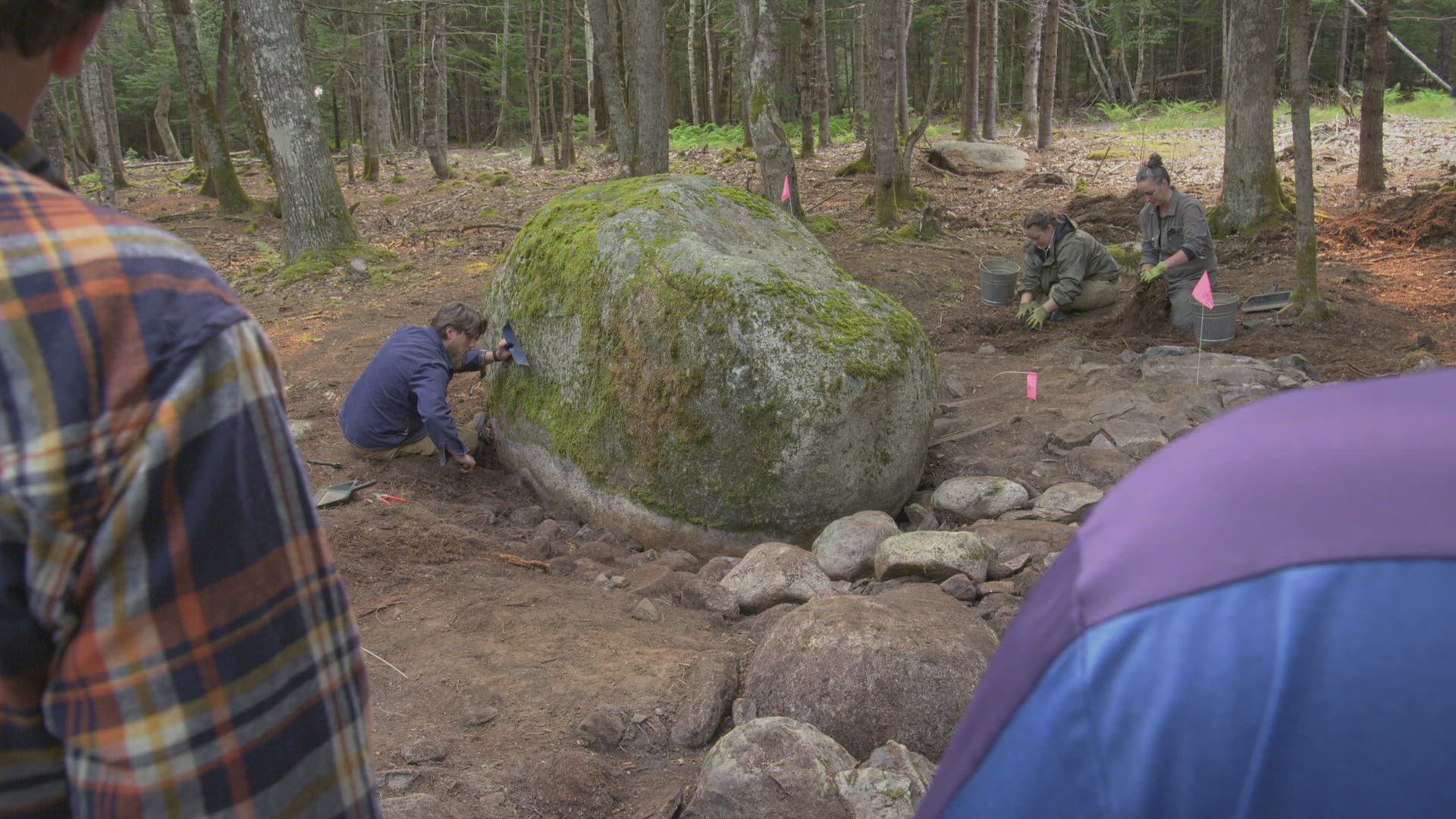
At the center of attention is a massive boulder resting above a carefully arranged series of smaller, evenly spaced stones. The configuration immediately raises questions. Rather than appearing natural, the structure suggests deliberate placement and purposeful design.
Evidence of Human Excavation Beneath the Boulder
Archaeologists explain that a trench had been excavated beneath the boulder, extending well below its base and later backfilled with rubble. Even more compelling, camera footage revealed voids beneath the stone—empty spaces that should not exist in undisturbed geology.




The implication is clear: someone intentionally tunneled beneath the boulder. The effort required would have been enormous, prompting one key question—why go to such lengths unless something valuable or important lay beneath?
Artifacts That Deepen the Mystery
Recent finds near the structure add further weight to the theory of deliberate activity. These include chain links believed to be several centuries old and an English bag seal potentially dating back as far as the 1300s.
When a small camera was lowered into one of the voids, the team spotted what appeared to be an iron spike and a reflective object that caught the eye—possibly something pearl-like. While far from conclusive, the discovery reinforced the idea that this was not random ground disturbance.
Is the Boulder a Cover, Not an Obstacle?
As discussion continues, a provocative theory emerges: what if the boulder is not something explorers tried to get around, but something intentionally placed to hide or protect what lies beneath?
The soil staining on the underside of nearby stones suggests they have remained undisturbed for a very long time—possibly predating even the original discovery of the Money Pit. This detail pushes the timeline further back and challenges long-held assumptions about activity on the island.

Removing the Stones to Go Deeper
To proceed safely and carefully, the team agrees that several surrounding boulders must be removed using heavy equipment. Marty emphasizes the need for control and patience, ensuring that nothing collapses into the excavation area below.
As the excavator lifts one of the stones away, the archaeological team gains more room to work by hand—opening the door to what could be a pivotal discovery.
A Textile Fragment Emerges
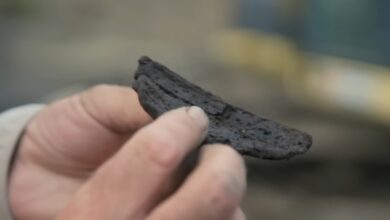
During sifting, Craig Tester uncovers a small piece of red material beneath one of the removed stones. Initial observations suggest it may be textile rather than organic debris.
Archaeologist Laird Niven confirms that the red coloration appears to be dye, not natural staining. Crucially, the fragment had been trapped beneath the boulder, indicating it was deposited after the stone structure was built but long before modern disturbance.
Laboratory Analysis Reveals Wool
In the lab, materials scientist Emma Culligan conducts a full analysis, including CT scanning and XRF testing. The scans reveal a knitted structure consistent with weft knitting—a method used for centuries.
A simple burn test provides the most decisive result. The material chars and crumbles rather than melting, confirming it is wool.
This finding is significant. Wool textiles were central to medieval English trade, and the discovery aligns strikingly with the previously recovered bag seal bearing a sheepskin symbol associated with Leeds—one of England’s historic wool-manufacturing centers.
What This Could Mean for Oak Island
The presence of dyed wool beneath a deliberately constructed stone feature strongly suggests organized human activity, possibly dating back to the medieval period. While the fragment alone does not prove the existence of treasure, it strengthens the case that this site was intentionally engineered and used by people with access to European goods and knowledge.
Experts will now examine knitting techniques and dye composition to narrow down the textile’s age and origin more precisely.
Digging Deeper, Carefully
With evidence mounting, the team agrees that the next step is to excavate further beneath the main boulder—slowly, methodically, and under archaeological supervision.
Whether the structure conceals a cache, a marker, or part of a larger system remains unknown. But one conclusion is increasingly difficult to ignore: whatever lies beneath this boulder was important enough for someone, centuries ago, to hide it with extraordinary care.
On Oak Island, another layer of the mystery has just begun to surface.