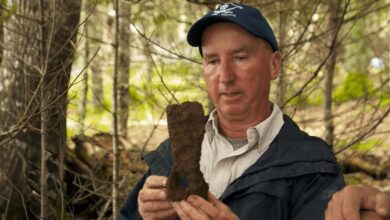
Oak Island’s Most Mind-Bending Discovery Yet: What’s Beneath the L-Shaped Boulder?

The Curse of Oak Island
Season 13, Episode 12: A Journey of Discovery
Introduction: A Web of Intrigue
In episode 12 of The Curse of Oak Island season 13, the mystery deepens as the team dives into multiple investigations that weave together archaeology, geology, history, and theory. The episode doesn’t provide a single dramatic reveal but instead builds momentum through various clues, each suggesting the possibility of something monumental hidden on Oak Island. From the enigmatic Boulder feature on Lot 8 to new findings in the Money Pit’s Peacock area, this chapter exemplifies how the Oak Island mystery thrives on incremental discovery.

The Boulder Feature on Lot 8: Evidence of Intentional Construction

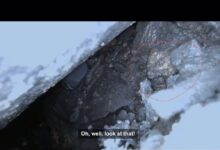


The episode opens with Rick and the team discussing the L-shaped boulder feature discovered on Lot 8, which they believe to be man-made. The deliberate placement of massive boulders and the disturbed soil beneath them suggest human involvement. What stands out is the team’s consensus that this feature was not just a random occurrence. Using a snake camera, the team identifies a tight, open void beneath the boulder, revealing a linear object, possibly an iron spike—an object that could be a remnant of a wooden structure long since decayed by the acidic soil of Nova Scotia.
This theory opens exciting possibilities, suggesting that the boulder may have been strategically placed to conceal something valuable. Rick’s cautious approach contrasts with Marty’s impatience, but both agree: whatever lies beneath the boulder is significant. The philosophical tension between seeking immediate answers and preserving archaeological integrity drives much of the episode’s dynamic.
Geological Clues in the Money Pit’s Peacock Area: A Tantalizing Void
As the team shifts focus to the Money Pit area, they drill borehole CN 12.5 in the Peacock region. The drilling uncovers slushy, unconsolidated material, indicating potential voids or collapse chambers—a hallmark of treasure hiding. At 145 feet, they discover a nearly 20-foot void that may be connected to the original Money Pit, reinforcing the theory of a collapsed chamber. Terry Mat’s insight that such loose materials could be prime hiding grounds for treasure adds a hopeful layer to the theory, even though no metal or artifacts are recovered.

A Surprising Discovery in the Northern Swamp: Pottery Shards and Iron Objects
Meanwhile, in the northern swamp on Tom Nolan’s property, the team uncovers a large quantity of pottery shards. Gary Drayton’s excitement grows as they find pieces that seem to date back to the 1600s or 1700s, possibly North Devon gravelware. This discovery significantly alters the timeline of activity on Oak Island, suggesting early European involvement rather than random or sporadic visits. The idea that these artifacts point to organized groups rather than isolated individuals adds weight to the theory that Oak Island was an active site in early colonial history.
Furthermore, the recovery of a heavy iron object, believed to be some kind of lifting device, further supports the notion of purposeful construction. The proximity of this object to previously discovered vaults and pathways strengthens the theory that Oak Island was not just visited, but developed as part of a larger, coordinated plan.
The Knights of Malta: Historical Connections and New Revelations
The episode gains a new layer of intellectual depth as the team travels to Fort Point in La Haven, Nova Scotia, to explore historical connections with Isaac Dazzle, a member of the Knights of Malta. Local historian Joan Dawson offers crucial insights into Rosili’s wealth, influence, and connection to the Knights of Malta during the early 17th century. This link is particularly significant given the Venetian trade beads found on Lot 5, which were commonly used by the French for trade with indigenous groups in the region.
Joan’s revelation that Rosili’s inventory included items like leather-covered chests and flintlock muskets that never returned to France adds another layer of mystery. The parallels between these items and artifacts discovered on Oak Island, such as a French-style flintlock mechanism, are striking and suggest that Oak Island may have been a destination for a group with a deliberate agenda.
The episode also explores the possibility of coded books, containing Maltese crosses and references to Josephus, which would be consistent with a Knight of Malta’s library. While these books have long been viewed as fringe evidence, Joan’s insights lend new credibility to the idea that they may have been connected to a historical figure with the means, opportunity, and motive to hide something valuable or sacred.
The Enigmatic Pearl: A Last-Minute Discovery
Back at Lot 8, the team conducts further camera work beneath the boulder, revealing a small, round, luminescent object that looks strikingly like a pearl. Though the team stops short of making definitive claims, their reactions suggest excitement and speculation. The object’s symmetry and unusual brightness set it apart from ordinary stone, igniting further theories about treasure concealed beneath the boulder.
Cumulative Discoveries: A Complex, Organized System
While this episode doesn’t deliver one dramatic breakthrough, it excels in showing how multiple discoveries are beginning to align. The man-made boulder feature, the engineered pathways and vaults in the swamp, and the geological clues in the Money Pit area all suggest a highly coordinated and intentional system, rather than isolated activities. The cumulative evidence points toward Oak Island being part of a larger plan, possibly tied to treasure or sacred artifacts that were deliberately concealed and protected.
Preserving Archaeological Integrity: A Shifting Approach
The team’s methodology has evolved since the earlier seasons, as demonstrated by Rick’s insistence on preserving the context of the boulder feature. Where earlier seasons might have prioritized dramatic results through aggressive digging, episode 12 demonstrates a more measured and careful approach. The emphasis on maintaining archaeological integrity before lifting the boulder signals a deeper understanding of the island’s historical significance.

The Role of Geological Evidence: A New Perspective
In the Money Pit area, the geological conditions discovered in borehole CN 12.5 provide a compelling argument that the treasure may no longer be where it was originally placed. The discovery of washed-out material and voids suggests that items may have migrated deeper or farther from their original location, reframing the treasure hunt as one focused on finding fragments hidden deep within unconsolidated soils. The Peacock drilling results, while not yielding artifacts, still offer critical evidence that the treasure may be hidden in a way that no one has yet considered.
Swamp Excavation: Evidence of Early Occupation
The discovery of pottery shards in the swamp, along with the iron lifting device, adds weight to theories involving early European occupation. The sheer volume of ceramics uncovered points to sustained activity on Oak Island, possibly from organized groups rather than individual explorers. This discovery challenges the traditional narrative and suggests that Oak Island may have played a significant role in the early days of European colonization in North America.
Conclusion: The Island’s True Treasure
As episode 12 comes to a close, it’s clear that Oak Island is more than just a treasure hunt—it’s a site of historical intrigue that may reveal a much broader narrative. From the engineered stone features to the historical connections with the Knights of Malta, each discovery brings the team closer to understanding the true purpose of Oak Island. While definitive answers remain elusive, the growing convergence of geological, archaeological, and historical evidence suggests that the island’s greatest treasure may not be gold, but a complex and carefully guarded story waiting to be uncovered.