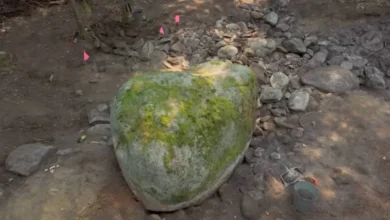
Smith’s Cove Discovery: Is the Flood Tunnel Finally Within Reach?
In the latest episode of The Curse of Oak Island, the team appears closer than ever to resolving one of the island’s most enduring mysteries. At Smith’s Cove, long believed to be the key to Oak Island’s engineered flood system, new discoveries suggest the legendary flood tunnel—thought to channel seawater into the original Money Pit—may finally be within reach.
After years of setbacks, false starts, and fragmentary evidence, recent findings are renewing optimism that the search is approaching a decisive moment.

Renewed Focus on Smith’s Cove and the Flood Tunnel Theory
Smith’s Cove has long occupied a central place in Oak Island theory. Early treasure hunters believed the area concealed artificial flood tunnels designed to protect whatever lies buried deeper inland. Now, Rick Lagina and his team believe they may be closing in on physical proof.

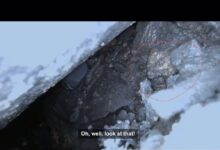


Working alongside Gary Drayton and Alex Lagina, the team has uncovered modern nails and other materials near the Restall shaft—evidence that earlier treasure hunters may have been closer to success than previously thought. These clues suggest the team is excavating in precisely the right location, potentially aligning with the original flood tunnel pathway.
An Iron Stove Door Raises New Questions
Adding another layer of intrigue, the team uncovered a heavily encrusted iron object buried beneath the Smith’s Cove shoreline. Identified as an iron stove door, the artifact immediately drew attention due to its distinctive starburst design.
Such objects are not merely domestic remnants; their placement and design raise questions about their purpose and age. The artifact is now being examined by archaeometallurgist Emma Culligan, whose analysis could help determine whether the stove door connects to earlier, non-colonial activity on the island.
The Starburst Motif and the Lead Cross Connection
Earlier in the season, the team recovered a lead cross from the same general area—an artifact some researchers associate with medieval religious orders, including the Knights Templar. The recurring starburst motif found on both the cross and the stove door has sparked speculation that the two objects may share a common origin.
While no conclusions have been drawn, such symbolic repetition strengthens arguments that Oak Island may have been used long before documented colonial settlement. If the connection holds, it could point to a sophisticated operation involving ritual, secrecy, or long-term planning rather than simple storage.

Reassessing the Restall Family’s Work
The Restall family’s tragic and determined efforts during the 1960s remain a defining chapter in Oak Island history. Evidence uncovered near their shaft—including nails and metal objects—suggests they may have been excavating directly above critical features of the flood system.
The current team’s discoveries are prompting a reassessment of the Restalls’ conclusions. Far from being misguided, their work may have intersected with the same engineered structures now under renewed investigation.
Engineering, Not Coincidence
What makes the Smith’s Cove discoveries particularly compelling is context. Individual artifacts can be dismissed as random, but when found in proximity to suspected man-made structures—wooden forms, shafts, and potential tunnel pathways—the narrative changes.
The flood tunnel theory depends on deliberate engineering, not chance. Every new discovery strengthens the argument that Oak Island’s features were designed to control water, conceal access, and protect something of importance.
How Close Is the Team to a Breakthrough?
While definitive proof of the flood tunnel has not yet emerged, the accumulation of evidence at Smith’s Cove suggests progress is no longer incremental—it is directional. The convergence of Restall-era materials, unusual metal artifacts, symbolic motifs, and structural clues points toward a deeper, more cohesive explanation of the island’s design.
What Comes Next at Smith’s Cove
As excavation continues, the focus remains on tracing the suspected tunnel path and determining whether it connects to inland shafts or deeper voids. Any confirmation of a functioning flood system would represent one of the most significant breakthroughs in Oak Island history.
For now, the mystery endures—but for the first time in years, it feels as though the answers may finally be within reach.