Oak Island’s Peacock Zone Reveals Geological Anomalies and Human-Made Structures

The Curse of Oak Island Season 13, Episode 9: Unveiling Layers of History
Introduction: A Pivotal Episode in the Oak Island Mystery
Episode 9 of The Curse of Oak Island Season 13 delivers a powerful combination of geological analysis, archaeological discovery, and historical intrigue that deepens the mystery surrounding the island. Rather than focusing on a singular dramatic reveal, this episode showcases how multiple investigative threads come together, reinforcing the enduring mystery that has captivated viewers for over two centuries. With renewed focus on key zones such as the Money Pit’s Peacock Zone and Lot 5, Episode 9 advances the search for human activity and artifacts on the island in both depth and meaning.
Exploring the Peacock Zone: Unconsolidated Material and Potential Human Activity
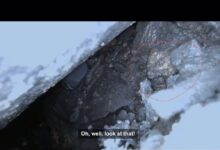


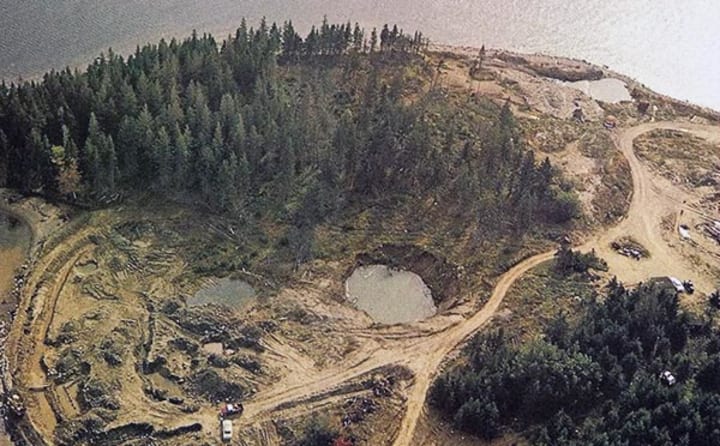
The episode opens with a renewed emphasis on the Money Pit area, specifically the poorly understood Peacock Zone. Rick and Marty Lagina’s decision to drill borehole BN13.5 marks a strategic shift, aiming to target a less explored area filled with unconsolidated, slushy material that has previously been challenging to examine fully. Geologist Terry Mat describes this zone as a destabilized mass, possibly resulting from nearby shafts or tunnels. The results of the drilling are remarkable, revealing a water-filled void between 148 to 158 feet deep. This void, which seems unnatural and difficult to explain through geology alone, sits above limestone-rich material consistent with the solution channel—a finding that suggests an intermediate chamber rather than a natural cavity.
Sonar Technology and Camera Imaging: The Search for Evidence of a Hidden Chamber
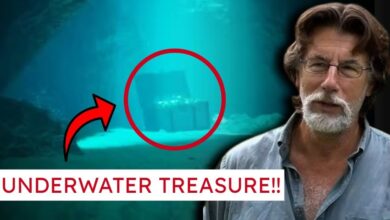
The team’s deployment of advanced sonar and camera technology in this episode transforms speculation into solid evidence. Sonar imaging uncovers linear openings and cavities extending in more than one direction, implying deliberate human excavation. Ken Dobson’s high-definition camera captures murky visuals of possible walls and stacked boulders, further supporting the idea of a constructed structure. While the team remains cautious, acknowledging the possibility of collapse masking a larger cavity, the evidence gathered strongly suggests intentional excavation, making this one of the most compelling underground discoveries of the season.
The Folded Coin on Lot 5: A Ritual Artifact Tied to the Knights Templar
While geological discoveries dominate the underground search, the surface narrative is enriched by the revelation of a folded copper coin recovered from spoil piles on Lot 5. Initially seeming insignificant, this coin’s true importance comes to light through CT scans and expert analysis. Dated to the late 1600s or early 1700s, the coin’s triple-folded design links it to medieval European rituals, specifically those associated with the Knights Templar. Such folded coins were often used as talismans to ward off evil or invoke divine protection, suggesting that someone on Oak Island was performing religious or protective rituals centuries before recorded history. This discovery adds weight to the growing theory that Oak Island was once a site of secretive, possibly religious, activity.

Lot 5: Further Evidence of Templar Influence
The growing assemblage of artifacts on Lot 5—including a 14th-century lead barter token, Phoenician trade beads, and ornate buttons—strengthens the argument for intentional human occupation tied to religious or military orders, likely the Knights Templar. The lot’s east-west orientation, which mirrors Templar architectural patterns in Europe, further supports the idea that this was not a random collection of items but part of a larger, organized effort with a deliberate spiritual or strategic purpose.
Wooden Stakes in the Swamp: Evidence of Intentional Design
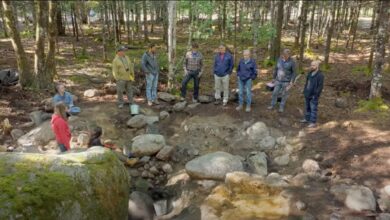
The discovery of multiple wooden stakes in the swamp’s southwest corner adds another layer to the mystery. Some stakes are four-sided, while others have eight sides. The eight-sided stake, in particular, is highly significant, as it may indicate a vault-like structure similar to previous finds in the swamp’s northern region. The stakes’ survival and in-situ preservation suggest that they were intentionally placed, possibly as markers or support structures for a larger, hidden feature. Additionally, wooden artifacts like a tapered plank further complicate the picture, pointing toward a long history of purposeful construction and use in the swamp, previously dismissed as a natural bog.
Lot 8: A Medieval Bag Seal and Evidence of Trade
At Lot 8, the team uncovers a lead bag seal—an artifact used to secure goods in cloth packaging and dating back to medieval Europe. The discovery of a bag seal on the interior of the island, far from any shoreline access, raises intriguing questions about the movement and storage of goods across Oak Island. Traditionally, goods arriving at the island would have done so by sea, but this find suggests that Oak Island may have been used for much more than burial or concealment. The presence of a bag seal hints at organized commerce, transport, or the control of valuable materials, adding yet another layer to the island’s complex history.
Advancing the Mystery: A Richer and More Complex Oak Island
The episode closes by emphasizing how the evidence accumulated across multiple disciplines—geology, archaeology, metallurgy, and history—reinforces the idea of intentional human activity on Oak Island. Rather than merely following isolated clues, the team is building a coherent narrative that suggests a purposeful, multi-generational occupation of the island. The discovery of geological voids, ritualistic artifacts, and evidence of trade and construction underscores that Oak Island may have been a hub of activity far earlier than mainstream historical accounts suggest.
Conclusion: Progress Through Patience and Precision
In Episode 9, the Oak Island team does not uncover a single game-changing discovery but instead advances the search incrementally through careful analysis and methodical investigation. The convergence of geological anomalies, historical artifacts, and symbolic rituals paints a picture of a site with deep and complex layers of history. As Rick Lagina observes, “facts are stubborn things,” and the growing body of evidence on Oak Island points to a site that has yet to reveal all of its secrets. With each new discovery, the mystery becomes richer, more complex, and tantalizingly close to unraveling.