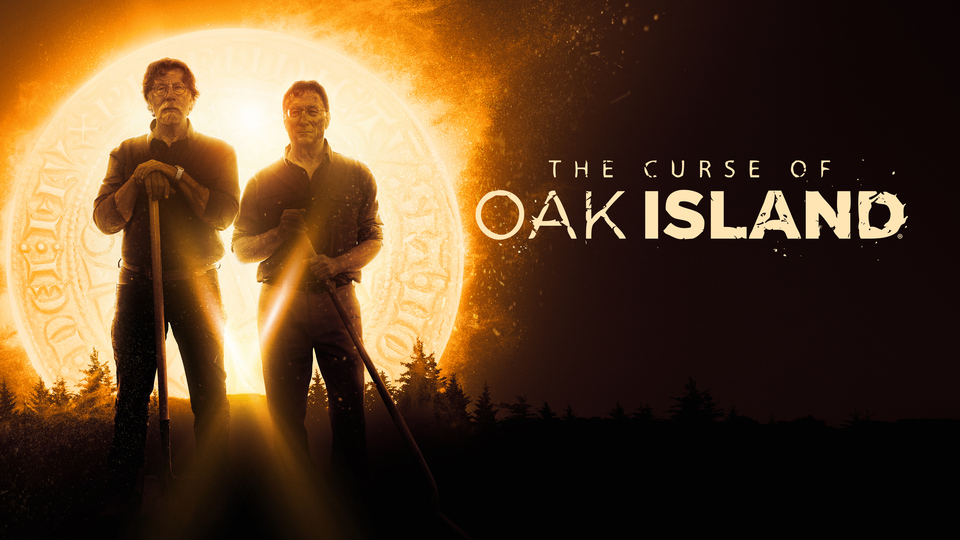
The Curse of Oak Island: From Treasure Hunt to Television Punchline
For more than a decade, The Curse of Oak Island occupied a unique space in reality television. It wasn’t just a show—it was a televised lottery ticket. Millions of viewers tuned in believing they were watching the possible unraveling of a 220-year-old mystery. Two brothers from Michigan, Rick and Marty Lagina, appeared to have what countless others before them did not: the resources, determination, and technology to finally crack the code of the Money Pit.
In its early seasons, the show felt alive. The danger was real, the mud was real, and the failures carried weight. Rick’s emotional belief balanced Marty’s skepticism, grounding the hunt in both hope and reason. But twelve seasons later, something fundamental has changed.
The question is no longer what is buried on Oak Island?
The real question is: How did television’s biggest treasure hunt become its biggest running joke?


The Early Promise: When the Search Felt Real
In the beginning, the Lagina brothers served as avatars for the audience. Rick was the dreamer, driven by history and destiny. Marty was the pragmatist, constantly questioning whether the effort was worth the cost. Their dynamic created trust.
The excavation felt dangerous. The setbacks were genuine. When nothing was found, it hurt—but it felt honest. Viewers accepted failure because they believed the search itself was authentic.
That trust was the show’s foundation.
The Oak Island Formula: Manufacturing Mystery
Somewhere between Seasons 5 and 8, the objective quietly shifted. The treasure hunt became secondary to the format. A rigid, repetitive structure emerged:
- The Hook: A mundane object—wood, iron, or stone
- The Inflation: Breathless narration linking it to Templars, Romans, or Vikings
- The Cliffhanger: A dramatic pause before commercials
- The Letdown: The object is revealed to be insignificant
This loop repeated endlessly. What was once a legitimate discovery—“We found wood”—became an internet meme symbolizing futility. The mystery stopped advancing. The show became procedural television about digging holes.
The Breaking Point: Season 12’s Trust Collapse
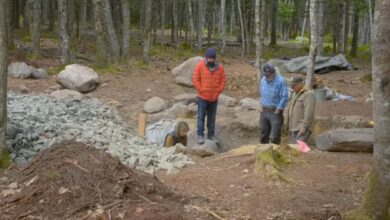
Season 12, Episode 11 marked a turning point. During a swamp excavation, viewers noticed a continuity error suggesting a discovery was staged. Gloves changed between shots. Mud coverage shifted unnaturally.
In reality television, editing is expected. But in a show built on historical discovery, staging the moment of discovery crosses an unforgivable line.
The production’s silence afterward was telling. By refusing to address the issue, the show tacitly admitted the reality on screen was compromised. From that moment on, viewers stopped watching as believers and started watching as skeptics—searching not for treasure, but for lies.
Regulations, Restrictions, and a Strategic Pivot
External pressures compounded the problem. Nova Scotia’s stricter archaeological regulations limited heavy excavation. Bulldozers were replaced by trowels. Action slowed to a crawl.
Instead of ending the series with dignity, the History Channel pivoted. Oak Island became a content mine rather than a treasure hunt. Enter Gary Drayton—charismatic, quotable, endlessly enthusiastic. “Bobby Dazzler” replaced breakthroughs. Personality replaced progress.
The goal was no longer solving the mystery—it was reaching the next season.

Narration as Manipulation
Narrator Robert Clotworthy’s role evolved from guide to manipulator. Today, nearly every claim is framed as a question:
Could this be Roman?
Could this prove Templar involvement?
This linguistic trick legally shields the show from accountability while planting false connections in viewers’ minds. The question mark became armor—allowing speculation without evidence.
Pseudoscience as Filler Content
As excavation stalled, the war room filled with theorists armed with star charts, cipher grids, and Google Earth lines. What began as engineering and history devolved into fringe speculation.
Theories weren’t tested—they were broadcast to kill time. If digging failed, confusion became the substitute.
The Sunk Cost Trap
Why do millions still watch?
Psychologists call it the sunk cost fallacy. Viewers have invested over 200 hours into this mystery. Walking away would mean admitting those hours were wasted. The producers exploit this relentlessly, dangling closure just out of reach.
People aren’t watching because it’s good.
They’re watching because quitting hurts more.
Marty Lagina and the Death of Skepticism
Marty Lagina once represented reason. Over time, his skepticism softened. The likely explanation is simple: Marty is no longer just a treasure hunter—he’s a producer.
Finding the treasure would end the show. Prolonging the mystery keeps it profitable. When the skeptic died, so did the show’s balance.
Science Without Substance
The show increasingly relied on scientific jargon—mass spectrometers, trace gold in water samples, dendrochronology. These microscopic findings allowed the show to claim “gold has been found” without producing a single coin.
It was sleight of hand—replacing tangible success with technical noise.
Follow the Money
Oak Island is now a brand. Tours. Museums. Gift shops. Merchandise. Solving the mystery would destroy the business model.
Not finding the treasure is more profitable than finding it.
Conclusion: The Real Curse
The Curse of Oak Island didn’t fail because the treasure wasn’t there. It failed because it broke its contract with the audience.
Viewers accepted empty holes—but not dishonesty. They accepted failure—but not manipulation.
The real curse isn’t ancient magic or pirate ghosts.
It’s a production cycle that refused to let a mystery end with dignity.
The Money Pit was never underground.
It was in the living rooms of millions of viewers—waiting for a payoff that was never coming.